
What's New in Video Editor AI for Content Creators This Year
 The landscape of content creation is evolving at warp speed. If you're a creator looking to stay ahead, you know that efficiency and quality are paramount. Are you ready to unlock a new level of creative power that simplifies your workflow and amplifies your storytelling?
This year, the advancements in video editor AI are set to revolutionize how you produce content. Imagine professional-grade editing accessible with unprecedented ease, transforming your raw footage into captivating narratives without the steep learning curve.
This article dives into the cutting-edge features and benefits of AI video editing tools specifically designed for 2026. We'll explore how these intelligent solutions can streamline your process, elevate your visual storytelling, and empower you to create more impactful content than ever before.
Top AI Video Editors for Content Creators in 2026
The landscape of video creation is rapidly evolving, with AI video editors becoming essential tools for modern content creators. In 2026, these platforms offer unprecedented efficiency and creative control, transforming raw footage into polished productions with minimal effort. This section explores the leading AI video editors that empower YouTubers, vloggers, and digital storytellers.
AuraClip: Your Personal AI Video Editing Agent
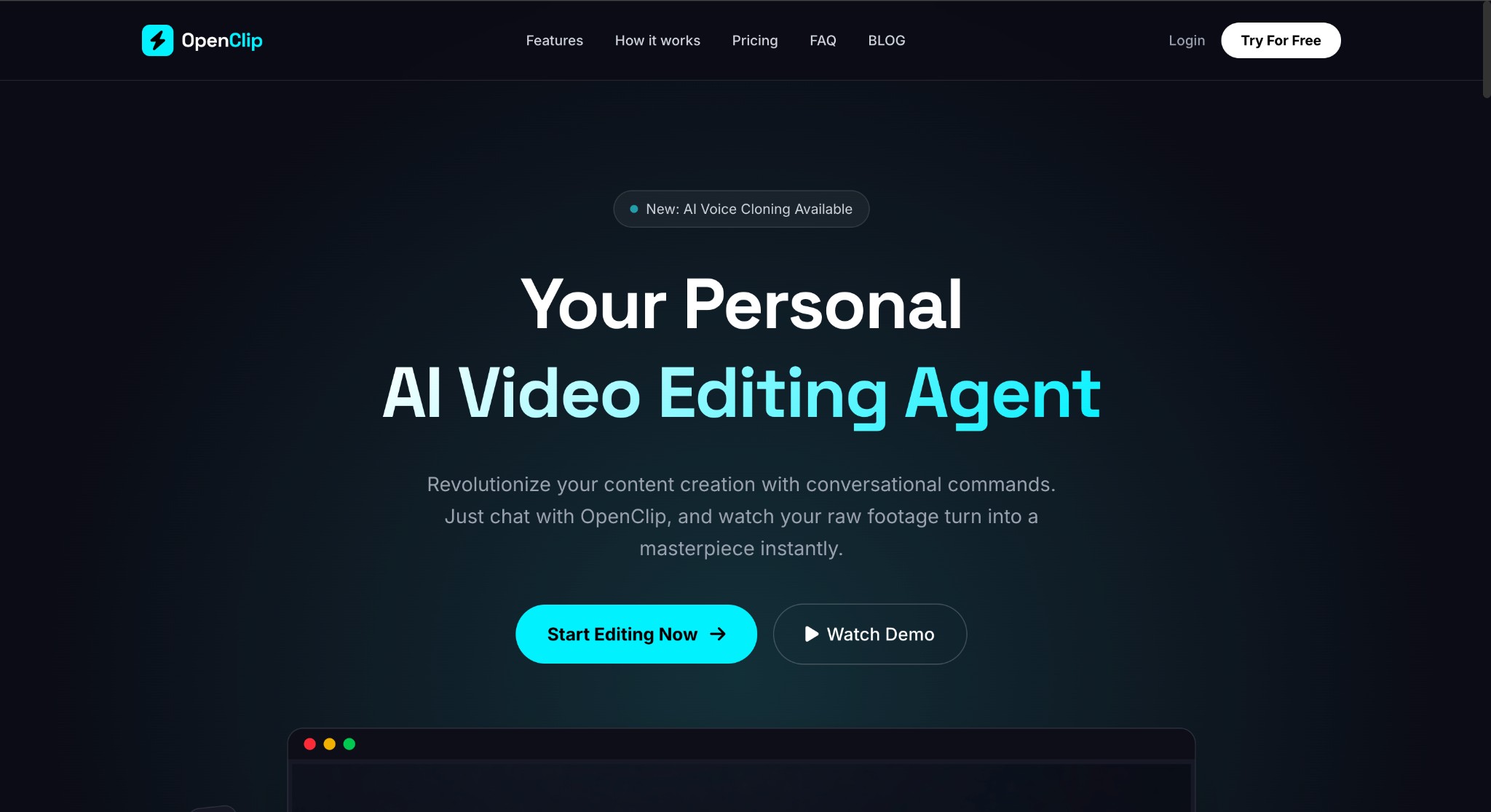
AuraClip emerges as a revolutionary personal AI video editing agent. It transforms raw footage into professional videos through simple chat commands. This AI excels at automatically removing silence, adding captions, and instantly inserting background music and smart transitions.
Designed for YouTubers, vloggers, and modern content creators, AuraClip enables multi-round revisions without requiring any editing skills. This makes it the ultimate content creation tool for 2026, streamlining complex tasks into intuitive conversations.
AI Auto-Captioning and Transcription Services
AI auto-captioning and transcription services are rapidly evolving in 2026, offering unparalleled accuracy and speed. These tools analyze audio content to generate precise subtitles and transcripts. This significantly improves video accessibility and SEO for creators.
Creators can now save hours previously spent on manual captioning. They can focus instead on the creative aspects of their content. This advancement democratizes professional video production for a wider audience.
Smart Transition and B-Roll Insertion Tools
In 2026, AI-driven smart transition and B-roll insertion tools are becoming indispensable. These technologies analyze video content to suggest and automatically implement seamless transitions. They also insert relevant B-roll footage, enhancing visual appeal and narrative flow.
This dramatically reduces the manual effort involved in post-production. Creators achieve a more dynamic and engaging viewing experience with greater ease. The AI's contextual understanding elevates storytelling.
AI-Powered Silence Removal
AI-powered silence removal is a game-changer for content creators in 2026. These tools intelligently identify and eliminate dead air, pauses, and filler words from video footage. This results in tighter, more engaging content that respects viewer time.
This feature alone can significantly boost viewer retention and overall watch time. It ensures that every second of the video contributes to the core message or entertainment value.
Natural Language Video Editing Platforms
The rise of natural language video editing platforms in 2026 allows creators to manipulate video content using simple text or voice commands. Instead of navigating complex timelines, users instruct the AI to perform specific edits. Commands like 'cut out this section' or 'add a fade-in' make video production more intuitive. This accessibility benefits beginners and experienced editors alike.
The Evolution of AI in Video Editing for 2026
By 2026, the landscape of video editing has been fundamentally reshaped by advancements in artificial intelligence. AI-powered tools are no longer novelties but essential components for creators seeking efficiency and professional results. This evolution democratizes content creation, making sophisticated editing accessible to a wider audience.
Advancements in AI Algorithms
The AI algorithms powering video editors in 2026 are significantly more sophisticated. These systems now enable features like advanced scene detection, allowing for precise content segmentation. Sentiment analysis helps select optimal B-roll footage that matches the emotional tone of a project. Furthermore, AI offers predictive editing suggestions, anticipating viewer engagement patterns to refine pacing and impact.
Impact on Workflow Efficiency
Workflow efficiency sees dramatic enhancement in 2026. AI automates time-consuming tasks such as color correction, audio mastering, and even basic narrative structuring. This frees creators to concentrate on storytelling and creative direction, rather than getting bogged down in technical execution.
Accessibility for New Creators
AI video editing tools are democratizing content creation in 2026. By abstracting complex editing processes into simple commands or automated workflows, these platforms significantly lower the barrier to entry. Individuals with no prior editing experience can now produce high-quality videos, transforming raw footage into polished content with ease. Tools like AuraClip exemplify this shift, acting as personal AI video editing agents that convert raw footage into professional videos through simple chat commands, automatically handling tasks like silence removal, captioning, and music synchronization.
How to Choose the Right AI Video Editor in 2026
Selecting the ideal video editor AI in 2026 hinges on aligning its capabilities with your unique content creation workflow. Understanding your specific needs is the foundational step before exploring the advanced features and pricing structures available.
Assessing Your Content Needs
Clearly define the type of content you create, such as vlogs, tutorials, or short-form social media videos. Identify your specific editing pain points, like time spent on repetitive tasks or the complexity of current software. This clarity helps prioritize features in a video editor AI. For instance, a vlogger might prioritize seamless B-roll insertion, while a tutorial creator might focus on efficient text overlays.
Key Features to Look For
In 2026, prioritize video editor AI tools offering robust auto-captioning for accessibility and engagement. Effective silence removal significantly streamlines dialogue-heavy content. Look for intuitive natural language commands, allowing you to edit via simple chat prompts, similar to how AuraClip operates, transforming raw footage through conversational instructions. Smart transition capabilities and seamless integration with your existing tools enhance workflow efficiency.
| Feature | AuraClip (Example) | Other AI Editors |
|---|---|---|
| Natural Language Commands | Yes (Chat-based) | Varies |
| Auto-Captioning | Yes | Yes |
| Silence Removal | Yes | Yes |
| Smart Transitions | Yes | Varies |
Budget Considerations for 2026
AI video editors in 2026 offer diverse pricing models, from free basic versions to premium subscriptions. Evaluate features at different price points to find a solution that fits your budget. A cost-effective video editor AI might provide essential auto-captioning and silence removal, while premium options could include advanced AI editing agents for multi-round revisions without editing skills. Align your investment with your content creation goals.
FAQ (Frequently Asked Questions)
Q1: What is the primary benefit of using an AI video editor in 2026?
A1: The primary benefit is significantly increased efficiency. AI tools automate tedious tasks like removing silences and adding captions. This allows creators to produce more content faster with less technical expertise.
Q2: Can AI video editors replace human editors entirely by 2026?
A2: No, AI video editors are unlikely to replace human editors entirely. Human creativity, nuanced storytelling, and complex artistic judgment are still crucial for high-end productions. AI serves as a powerful assistant.
Q3: How accurate are AI-generated captions in 2026?
A3: AI-generated captions in 2026 achieve high accuracy, often exceeding 95% for clear audio. A quick human review is still recommended for optimal results, especially with background noise or accents.
Q4: Are AI video editing tools suitable for beginners in 2026?
A4: Yes, AI video editing tools are highly suitable for beginners in 2026. Many feature intuitive interfaces and automated workflows. Tools like AuraClip enable users to edit via simple chat commands.
Q5: What are the main AI features to expect in video editors in 2026?
A5: Expect advanced auto-captioning, intelligent silence removal, and smart transitions. Natural language editing commands and AI-powered music selection are also key features. These streamline the entire video production process.
Conclusion
In 2026, video editor AI has transformed from a distant dream into a tangible force, revolutionizing content creation with unparalleled speed and efficiency. These advanced tools are no longer just a novelty but a critical component for any creator aiming to stand out. Embracing AI video editing is now essential for unlocking new creative potential.
Now is the time to actively explore the cutting-edge AI video editing software available this year. Experiment with their diverse features to understand how they can best serve your unique workflow and project needs. Integrating these powerful AI capabilities will undoubtedly streamline your editing process and elevate your content quality.
Don't get left behind; seize the future of video editing in 2026! Leverage the power of AI to craft more compelling narratives, captivate your audience, and achieve new heights in your content creation journey. Start experimenting today and witness your creativity soar!