
The Future of Short Video AI: Moving From Auto-Clipping to Context-Aware Editing

Are your clips drowning in the endless sea of social media content? We all know the frustration of spending hours slicing up raw footage, only to see it flop on TikTok or YouTube Shorts. It is no longer enough to just cut out the silence; you need content that truly resonates with your audience immediately.
While traditional tools speed up the process, the next generation of short video AI is changing the game completely. We are moving rapidly beyond simple auto-clipping algorithms that blindly chop footage based on volume levels. Instead, the industry is shifting toward intelligent systems that actually understand the context, humor, and narrative flow of your videos.
In this article, we will explore how context-aware editing and agent-based workflows are revolutionizing content creation. You will discover how to leverage conversational interfaces to refine your edits and maximize viral potential with minimal effort. Get ready to transform your workflow and create personalized, high-impact videos that demand attention.
The 'Short Video' Trap: Quantity Over Quality with AI
Current short video AI tools frequently focus on volume. They generate dozens of clips rapidly from a single source. However, a high clip count does not guarantee virality. Randomly cut segments fail to capture audience attention like well-structured narratives do. Algorithms on TikTok and YouTube Shorts prioritize retention, which requires logical flow rather than disjointed highlights.
The core problem involves context. AI lacks the capacity to understand emotional cues or video subtext. It produces generic outputs that miss the storytelling crucial for engagement. Consequently, creators must manually refine these auto-generated clips. They add the context and structure that basic automation fails to provide.
| Feature | Standard Auto-Clipping | Narrative-Led Editing |
|---|---|---|
| Focus | High Volume Output | Story Structure |
| Context | Keyword/Motion Detection | Emotional Resonance |
| Outcome | Generic Segments | High Viewer Retention |
Context is King: Understanding Footage for Smarter Editing
Context-aware short video AI analyzes more than audio waveforms. Algorithms process visual data to identify the narrative arc and emotional tone. This technology detects specific events and key moments rather than just removing silence.
Deeper comprehension drives intelligent decisions. The system highlights action sequences or builds teasers around specific themes. It inserts relevant B-roll to match the speaker's topic. This shift allows the AI to participate actively in storytelling.
| Feature | Basic AI Editing | Context-Aware AI |
|---|---|---|
| Trigger | Audio volume / Silence | Visual content / Sentiment |
| Action | Trims dead air | Selects key moments |
| Result | Shorter clips | Narrative-driven stories |
Contextual understanding upgrades the editing process. The software delivers logical story structures instead of randomly trimmed clips. This results in engaging content with reduced manual input.
The Agent Workflow: A New Era of AI Video Editing
The traditional editing timeline is evolving into a collaborative workspace. Creators now direct intelligent agents rather than manually manipulating every cut. This workflow shifts the focus from technical execution to creative strategy, streamlining production for modern demands.
Step 1: Upload Raw Footage
The process begins when a creator uploads raw video files. The system accepts diverse source materials, including 4K vlogs, high-frame-rate gaming sessions, or multi-camera podcast interviews. Upon ingest, the software indexes the visual and audio data for processing.
Step 2: Prompt the AI Agent
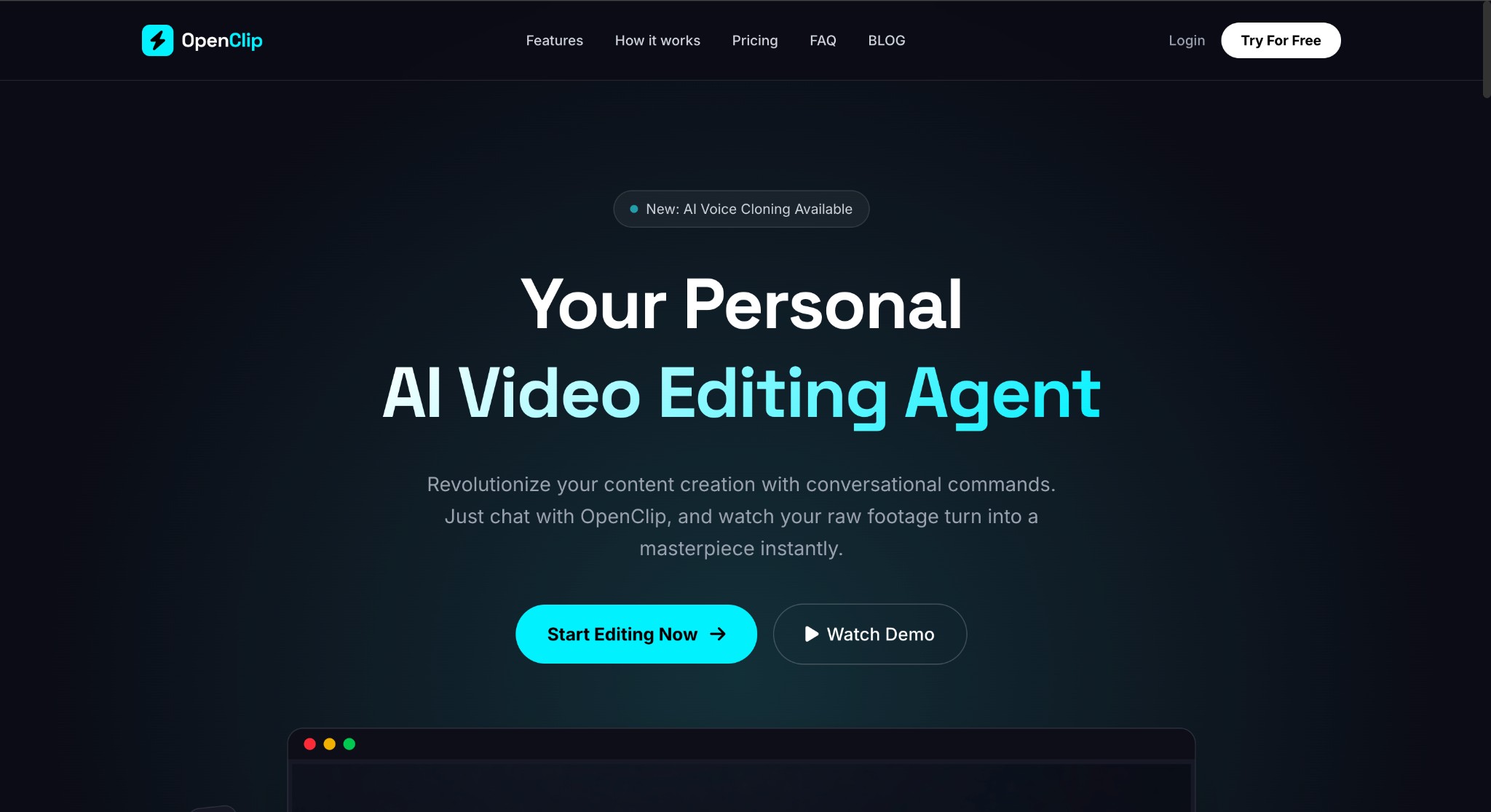
Operators bypass complex settings menus. Instead, you use natural language to guide the short video AI agent. You type specific instructions such as "Highlight the action scenes" or "Create a 60s teaser for my latest episode." This text input directly controls the editing parameters.
Step 3: AI Executes Specific Edits
The agent executes these commands immediately. It applies intelligent face tracking to keep subjects centered in the frame. The system generates custom captions that match the audio timing. It also inserts B-roll clips to visually support the spoken narrative.
Why 'Chat' Beats 'Templates'
Conversational editing surpasses the limitations of rigid presets. Large language models interpret nuance, allowing for brand-specific styles rather than generic outputs. A chat-based workflow adapts to the content, whereas templates force content into a pre-defined shape.
| Feature | Traditional Templates | AI Agent Chat |
|---|---|---|
| Control Interface | Fixed checkboxes/sliders | Natural language prompts |
| Output Style | Repetitive and generic | Unique and brand-specific |
| Flexibility | Rigid structure | Context-aware adaptation |
| Learning Curve | Requires tool knowledge | Uses conversational English |
Platform Specifics
This advanced approach optimizes content for mobile consumption. The AI automatically crops landscape footage into a 9:16 vertical aspect ratio. This ensures the final video integrates correctly with platforms like TikTok, YouTube Shorts, and Instagram Reels without manual resizing.
Leveraging AI for Enhanced Video Content Creation in 2026
By 2026, video production relies on advanced automation to streamline workflows. Creators use generative models to reduce manual editing time significantly. AI tools handle complex rendering tasks in minutes rather than days. This shift allows production teams to focus on strategy rather than technical execution.
The Power of Generative AI and AI Video Generators
Generative algorithms build high-resolution scenes directly from data inputs. These systems eliminate the need for physical sets in many commercial projects. Studios generate 4K assets directly from software interfaces, removing logistical constraints.
Repurposing Video Content with AI
Short video AI tools extract highlights from long-form footage automatically. Software identifies key moments and crops them to 9:16 vertical formats for social platforms. This process turns one hour of footage into multiple distinct clips instantly.
AI Avatar and AI Video Ads
Brands deploy digital avatars for continuous customer interaction. Synthetic presenters speak multiple languages fluently without scheduling conflicts. Marketing campaigns deliver personalized messages to specific user segments without reshooting.
Automated Story to Movie and Text-to-Video Innovations
Text-to-video engines convert scripts directly into final renders. Creators input text prompts, and the system generates coherent visual narratives. This technology removes technical barriers for filmmakers.
| Feature | Traditional Production | AI-Enhanced Production |
|---|---|---|
| Script Visualization | Hand-drawn storyboards | Instant text-to-video render |
| Actor Availability | Schedule dependent | 24/7 AI Avatar availability |
| Formatting | Manual cropping | Auto-reframing to 9:16 |
AI adoption streamlines the creative workflow across the industry. Studios save budget on logistics and post-production. The sector moves toward a data-driven content strategy.
FAQ (Frequently Asked Questions)
Q1: How can AI improve the quality of my short videos?
A1: AI enables sophisticated editing techniques beyond simple cuts. Algorithms perform intelligent scene selection to highlight key moments. They automatically generate dynamic captions and insert contextually relevant B-roll. This reduces manual editing time while increasing visual engagement.
Q2: What is the difference between auto-clipping and context-aware AI editing?
A2: Auto-clipping relies on mechanical triggers like audio levels. Context-aware AI analyzes the footage's narrative flow and emotional cues. This results in more meaningful sequencing and better story continuity.
Q3: Can AI truly understand the context of my video footage?
A3: Current AI models interpret footage based on learned patterns and user prompts. While not fully human-like, context-aware agents analyze visual data to match specific moods. This capability produces nuanced edits that align with the intended message better than random algorithms.
Q4: Are AI agents better than traditional AI video generators for creators?
A4: Traditional generators often force users into fixed templates. AI agents provide an interactive experience through natural language prompts. This allows creators to define unique styles and receive a customizable output.
Q5: What platforms are best suited for AI-generated short video content?
A5: TikTok, YouTube Shorts, and Instagram Reels dominate the vertical video market. These platforms support high consumption rates. Short video AI tools specifically optimize aspect ratios and pacing to match the algorithms of these mobile-first environments.
Conclusion: AI as an Agent, Not Just a Tool
The future of short video AI lies in embracing technology as an intelligent agent. It acts as more than a mechanism for scaling output. This agent understands your creative vision. It enhances the final product rather than simply speeding up the process.
Shift from basic auto-clipping to context-aware editing. AI agents powered by natural language prompts allow for precise control. This method produces engaging content that connects with audiences.
| Feature | Traditional Auto-Clipping | Agent-Based AI Editing |
|---|---|---|
| Input Method | Manual timestamps | Natural language prompts |
| Primary Goal | Volume/Speed | Context/Storytelling |
| Editing Logic | Random/Motion-based | Narrative-aware |
Utilize these advanced workflows in 2026 to increase content volume. You maintain the 'soul' of your storytelling while scaling up. This ensures your videos remain distinct in a crowded feed.
Start experimenting with agent-based generation for YouTube Shorts, TikToks, and Instagram Reels. The evolution of these tools promises an intuitive experience. Sophisticated video creation is now accessible to more creators.
As we look toward 2026, the landscape of digital content creation is undergoing a massive, game-changing transformation. The evolution of short video AI is rapidly shifting beyond simple auto-clipping tools into the realm of sophisticated, context-aware editing agents. This advanced technology is now essential for creators looking to capture attention on crowded platforms like TikTok and Instagram Reels.
To stay ahead of the curve, you should actively start experimenting with new agent-based platforms that understand complex natural language prompts. Shift your focus away from tedious manual cuts and concentrate on the storytelling nuances that truly engage your viewers. By guiding your AI editor with specific context, you will consistently produce viral-worthy clips that resonate deeply with your audience.
Are you ready to completely transform your short video strategy and dominate the social media feed? Embrace the future of intelligent editing today and unlock your content's true potential for a successful 2026. Dive into these innovative tools now to start creating high-quality videos that leave a lasting impact.