
AI Auto Editing Video 2.0: Why a "Chat + Timeline" Workflow Gives You Full Control
Are you tired of spending endless hours scrubbing through footage, only to be frustrated by clumsy automated tools that completely miss the mark? For too long, content creators have been stuck choosing between tedious manual labor and "dumb" algorithms that lack creative nuance. The era of accepting mediocre results is finally over, paving the way for a smarter, more precise approach to post-production.
We are now entering a groundbreaking phase of production where intelligent AI Video Agents replace simple, repetitive scripts. This major evolution in AI auto editing video technology moves far beyond random cuts to offer deep, contextual understanding of your raw footage. It is no longer just about speed; it is about collaborating with a smart assistant that truly listens to your specific creative direction.
In this article, we explore the revolutionary "Chat + Timeline" workflow that puts you back in the driver’s seat. You will discover how combining conversational AI with a traditional timeline delivers unparalleled precision for your podcasts, vlogs, and gaming content. Get ready to master the ultimate hybrid solution that gives you the best of both worlds in 2026.
The Evolution of AI Video Editing: From Tools to Agents in 2026
The landscape of post-production shifts rapidly. By 2026, the industry anticipates a massive transition from passive software inputs to proactive, autonomous assistants. This evolution aims to drastically reduce manual keystrokes while increasing creative output for editors.
Defining the Current State of AI Auto Editing
Current AI auto editing video solutions typically rely on basic silence detection algorithms and motion thresholds. These tools execute cuts based on decibel levels rather than content relevance.
The software identifies pauses but often fails to recognize narrative pacing. This results in generic sequences that lack emotional context, forcing editors to review every automated decision manually.
The Frustration with "Dumb" Automation
Creators frequently report that basic automation creates additional workload. If a tool cuts a pause intended for dramatic effect, the user must manually restore the clip.
This "dumb" automation functions as a blunt instrument. It ignores user intent beyond simple binary commands. Consequently, editors spend significant time on post-editing cleanup to correct these indiscriminate cuts.
| Feature | Current Automation | AI Video Agents (2026) |
|---|---|---|
| Input Method | Buttons/Sliders | Natural Language Prompts |
| Analysis Type | Decibel/Pixel Motion | Semantic/Narrative Understanding |
| Role | Task Executor | Proactive Partner |
Introducing AI Video Agents
The future lies in AI Video Agents. These sophisticated models process conversational commands and analyze video content deeply.
"Agents move beyond simple tools to become proactive partners in the content creation process."
Instead of merely removing silence, an agent identifies key moments and assembles complex edits autonomously. This shift empowers creators to direct the vision while the agent handles the technical execution.
Tools vs. Agents: The Paradigm Shift in 2026
The landscape of content creation is evolving. By 2026, the distinction between manual software and intelligent assistants will define workflow efficiency. This evolution moves creators from manual input to strategic oversight.
How AI Video Tools Operate
Traditional editing software functions reactively. These systems wait for specific user inputs and act only when commanded. They serve as extensions of manual processes, requiring explicit clicks for every action without inherent understanding.
| Aspect | Traditional Tools | AI Agents |
|---|---|---|
| Operation Mode | Reactive | Proactive |
| Input Method | Clicks/Menus | Natural Language |
| Context Awareness | None | High Context |
| Workflow | Manual Execution | Goal-Oriented |
The Power of AI Agents and Conversational Commands
AI agents utilize Large Language Models (LLMs) and Natural Language Processing (NLP). These systems interpret context and execute high-level goals proactively. Instead of selecting specific tools, users issue conversational commands. This approach transforms AI auto editing video workflows into dialogue-driven processes.
AuraClip: An Example of Agentic Video Editing
AuraClip exemplifies this agentic capability. Users interact through a chat interface rather than complex menus. A user types "Cut boring parts" or "Make it energetic," and the agent interprets the intent. The system then applies specific adjustments directly to the video timeline.
This shift reduces technical barriers significantly. Creators focus on narrative structure while the software handles execution.
The "Chat-to-Edit" Workflow: Seamless AI Video Editing in 2026
Video editing in 2026 shifts from complex timelines to simple conversation. The "Chat-to-Edit" workflow transforms how creators interact with raw footage, removing technical barriers.
The Technology Behind Text-to-Edit (NLP)
Sophisticated Natural Language Processing (NLP) and Natural Language Understanding (NLU) models drive this system. These engines parse conversational input and identify specific keywords within a request.
The software analyzes the context and translates text into precise timeline actions. This technology bridges the gap between human language and software execution.
Practical Commands for Instant Editing
Creators issue direct prompts to control the AI auto editing video process. This approach streamlines the editing workflow significantly.
Common commands include:
"Cut silent pauses."
"Remove filler words."
"Add dynamic transitions."
"Make the pacing faster."
| Feature | Traditional Editing | Chat-to-Edit Workflow |
|---|---|---|
| Input Method | Manual Mouse Clicks | Natural Language Prompts |
| Filler Removal | Frame-by-Frame Cuts | Single Text Command |
| Transition Speed | Manual Adjustment | "Make pacing faster" |
| Learning Curve | High (Software Skills) | Low (Conversational) |
Benefits: Speed Meets Precision
This workflow merges AI processing speed with human intent. Algorithms handle repetitive tasks like captioning, while the creator directs the vision.
This ensures automated edits align strictly with specific goals. The result is faster content production without sacrificing accuracy. Chat-to-Edit reduces production time, allowing creators to focus on storytelling rather than software mechanics.
Why "Chat + Timeline" is the Holy Grail for AI Auto Editing Video in 2026
Creators in 2026 demand precision. Black-box automation often fails to capture narrative nuance. The industry now favors a hybrid model. This approach merges conversational AI with traditional non-linear editing (NLE) interfaces. It represents the future of AI auto editing video.
The Pitfalls of Fully Automated Editing
Relying strictly on automation creates blind spots. Algorithms miss context. A dramatic pause might vanish. Without a visual representation, you cannot verify cut points. You lose control. Editors need visual feedback to ensure narrative flow.
The Power of Visual Editing and Timeline Control
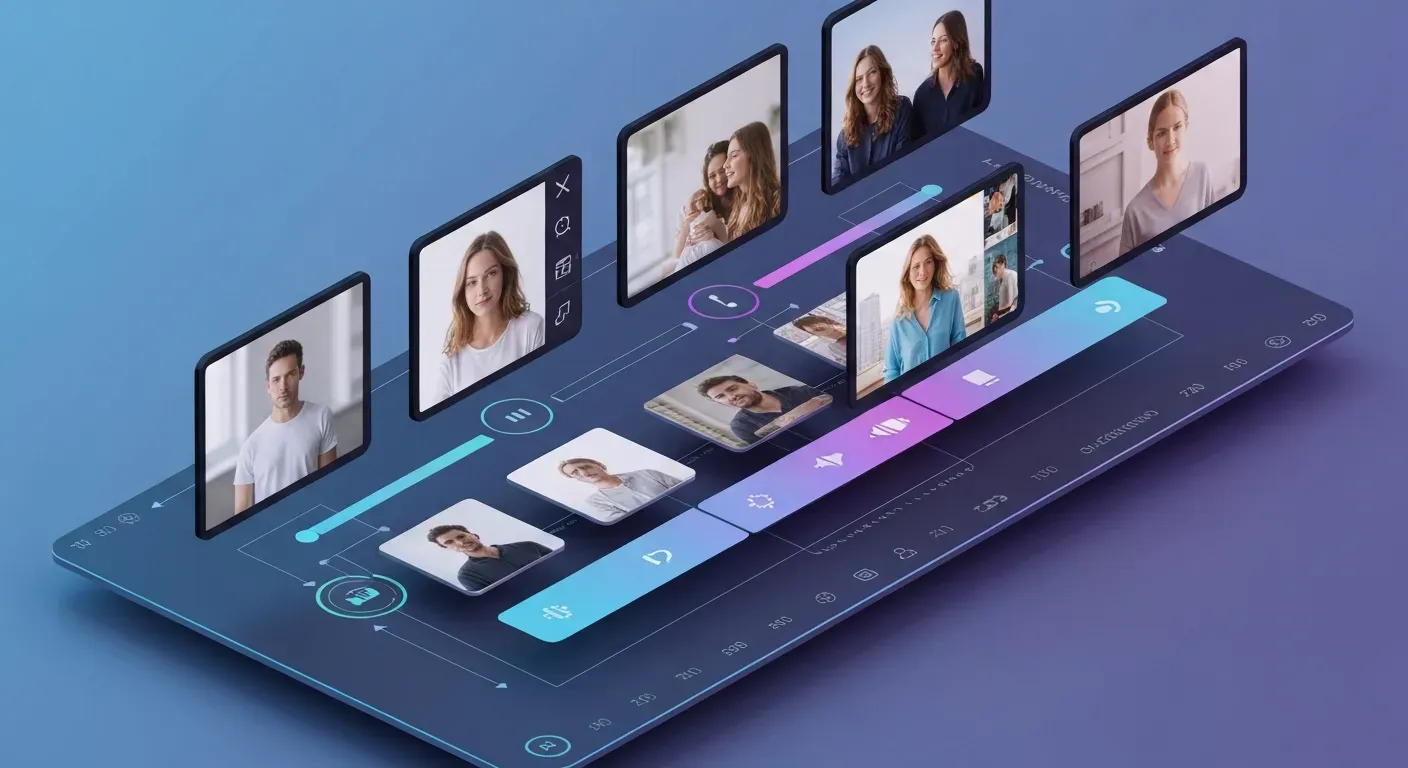
The "Chat + Timeline" approach combines speed with accuracy. Chat commands handle bulk tasks, while the timeline allows for frame-by-frame adjustments.
| Feature | Chat-Only | Traditional Timeline | Chat + Timeline |
|---|---|---|---|
| Speed | High (Instant) | Low (Manual) | High |
| Precision | Low | Frame-Accurate | Frame-Accurate |
| Control | Limited | Total | Total |
| Primary Input | Text/Voice | Mouse/Keyboard | Hybrid |
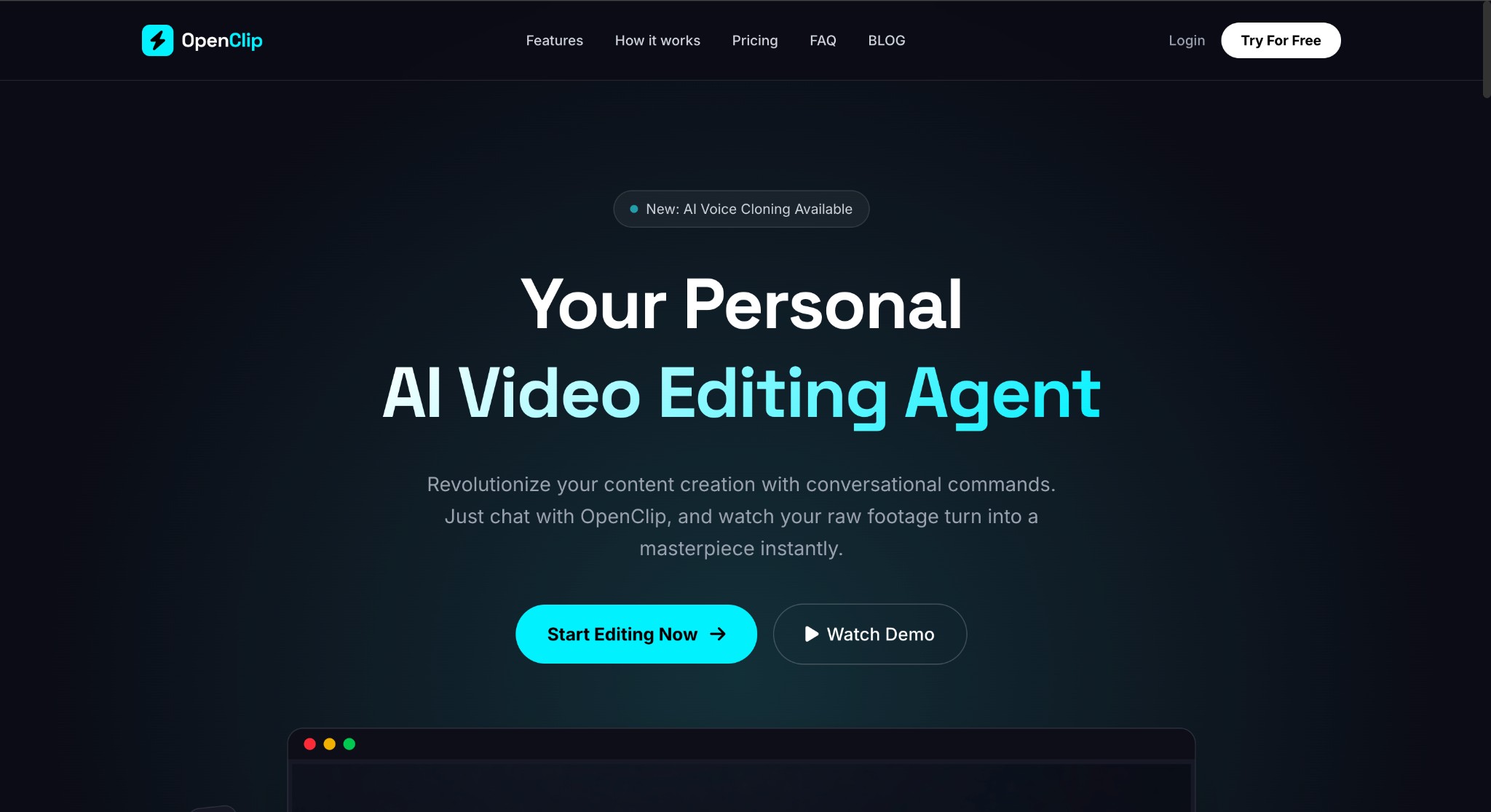
AuraClip's UI: Blending Chat and Timeline
AuraClip integrates these two distinct workflows. Users issue text commands for rough cuts. The system executes these instantly.
Operators then switch to the visual timeline. Here, they refine transition points and adjust audio levels. This workflow ensures speed without sacrificing artistic integrity.
Conclusion: This dual interface empowers creators. It balances machine efficiency with human judgment. Users maintain authority over every frame. The result creates professional videos faster than ever before.
Real-World Scenarios: AI Video Agents in Action in 2026
By 2026, content creators deploy autonomous software to manage post-production workflows. These tools utilize AI auto editing video capabilities to process raw footage without human input. The production model shifts from manual timeline manipulation to strategic oversight.
Podcasts: Effortless Speaker Delineation and Silence Removal
AI agents distinguish individual voice frequencies to separate speakers on multi-track recordings. They scan audio waveforms to delete silence gaps exceeding 200ms and excise filler sounds. This automation reduces rough cut assembly time by approximately 70%.
Vlogs: Contextual B-roll Insertion
Algorithms transcribe narration to understand context in real-time. When a speaker mentions specific subjects, the agent retrieves matching 4K clips from connected stock libraries. It aligns visuals with the spoken word automatically, building the narrative layer.
Gaming: Highlight Extraction via Excitement Detection
Software monitors audio levels for spikes above -10dB and rapid frame changes. It identifies high-action sequences to generate 60-second vertical clips. This ensures rapid deployment to platforms like YouTube Shorts.
Leveraging AI for YouTube Automation and Faceless Channels
Faceless channels utilize these systems for consistent daily uploads. The table below compares traditional methods with 2026 agent workflows.
| Feature | Manual Editing | AI Agent Editing | Impact |
|---|---|---|---|
| Silence Removal | Manual cutting (Hours) | < 1 second processing | Instant clean-up |
| B-Roll Search | Keyword search (Mins) | Contextual auto-match (ms) | Zero search time |
| Highlight Clip | Manual review | Decibel-trigger detection | Auto-generation |
High-volume production becomes sustainable through this automation. Creators maintain active channels with minimal time investment. This technology fundamentally alters the output speed of the creator economy.
The Future of Video Editing: Interactive, Not Just Automated
Video editing moves beyond simple cuts. Creators now guide tools rather than watching passive processing. The industry shifts toward AI auto editing video systems that interact directly with human input.
The Rise of Generative Features
Sophisticated generative features allow creators to direct the AI. This moves past basic automation into dynamic content creation. Users guide the software to produce engaging results.
| Workflow Aspect | Traditional Automation | Interactive AI |
|---|---|---|
| Control Mechanism | Static Templates | Generative Prompts |
| User Interaction | Passive Monitoring | Chat + Timeline |
| Output Type | Standard Cuts | Dynamic Media |
The Importance of AI Models in Editing
Powerful models analyze complex visual and auditory information. This technology enables intelligent, nuanced editing decisions. The "Chat + Timeline" workflow represents a leap forward in usability.
Final Thoughts on AI Video Editing
AI Video Agents democratize high-quality video production. This empowers creators to execute professional work without traditional technical barriers.
FAQ (Frequently Asked Questions)
Q1: What is the primary advantage of the "Chat + Timeline" workflow for AI auto editing video?
A1: It combines the speed and efficiency of AI-driven chat commands with the precise control and visual feedback of a traditional editing timeline.
Q2: How does AI understand my editing instructions through chat?
A2: Advanced Natural Language Processing (NLP) models interpret your conversational prompts, translating them into specific actions on the video timeline.
Q3: Can AI agents truly replace human editors with this workflow?
A3: No, AI agents act as powerful assistants. They handle repetitive tasks, allowing human editors to focus on creative direction and final artistic refinements.
Q4: What types of content are best suited for this AI auto editing video approach?
A4: Podcasts, vlogs, gaming content, and any video requiring quick turnaround and efficient editing of spoken word or action sequences benefit greatly.
Conclusion
In 2026, the landscape of post-production is being fundamentally reshaped by AI Video Agents and the intuitive "Chat + Timeline" workflow. This powerful combination moves far beyond simple automation to offer creators unprecedented control, speed, and exact precision over their projects. By leveraging the latest advancements in AI auto editing video, you ensure your workflow remains cutting-edge and fully adaptable to your unique creative needs.
To capitalize on this evolution, explicitly embrace the shift towards agentic video editing rather than relying on static, automated templates. Actively explore AI tools that offer conversational commands, allowing you to refine edits through chat while maintaining oversight on a visual timeline. Integrating this hybrid approach will immediately enhance your content creation process and streamline your daily operations.
Unlock your true creative potential today by mastering the nuances of AI auto editing video within this new, interactive environment. Start experimenting with "Chat + Timeline" workflows right now to revolutionize your video production and stay ahead of the competition. There has never been a better time to let AI handle the heavy lifting while you focus on storytelling.