How Can Automated Video Editing Simplify Your Content Creation Process?


In the hyper-competitive digital landscape of 2026, keeping up with the insatiable demand for fresh, high-quality content often feels like an uphill battle. You likely spend countless hours sifting through raw footage and tweaking transitions, leaving precious little time for actual creativity. The relentless pressure to produce daily videos can quickly lead to burnout if you rely solely on traditional, manual workflows.

Good news. Smart computers have changed how we finish videos. They have tools that do the hard work. You can automate video editing. This saves you time. Boring tasks become easy. You can then focus on telling good stories. You can also focus on keeping people interested. You won't have to worry about complicated editing.

This article explores the cutting-edge technologies that are fundamentally redefining content production standards in 2026. We will dive into the top AI-driven tools available today and demonstrate how innovative workflows can significantly maximize your output without ever sacrificing quality. Get ready to streamline your production strategy and let intelligent software handle the rest.

Top 5 Ways Automated Video Editing Simplifies Content Creation in 2026

Video production needs speed and care in 2026. New tools edit videos faster. They fix old problems. AI does the hard work. This changes how creators make media. Now, creators focus more on ideas. They spend less time on technical work.

1. Auraclip: Revolutionizing Rough-Cuts with Conversational Editing

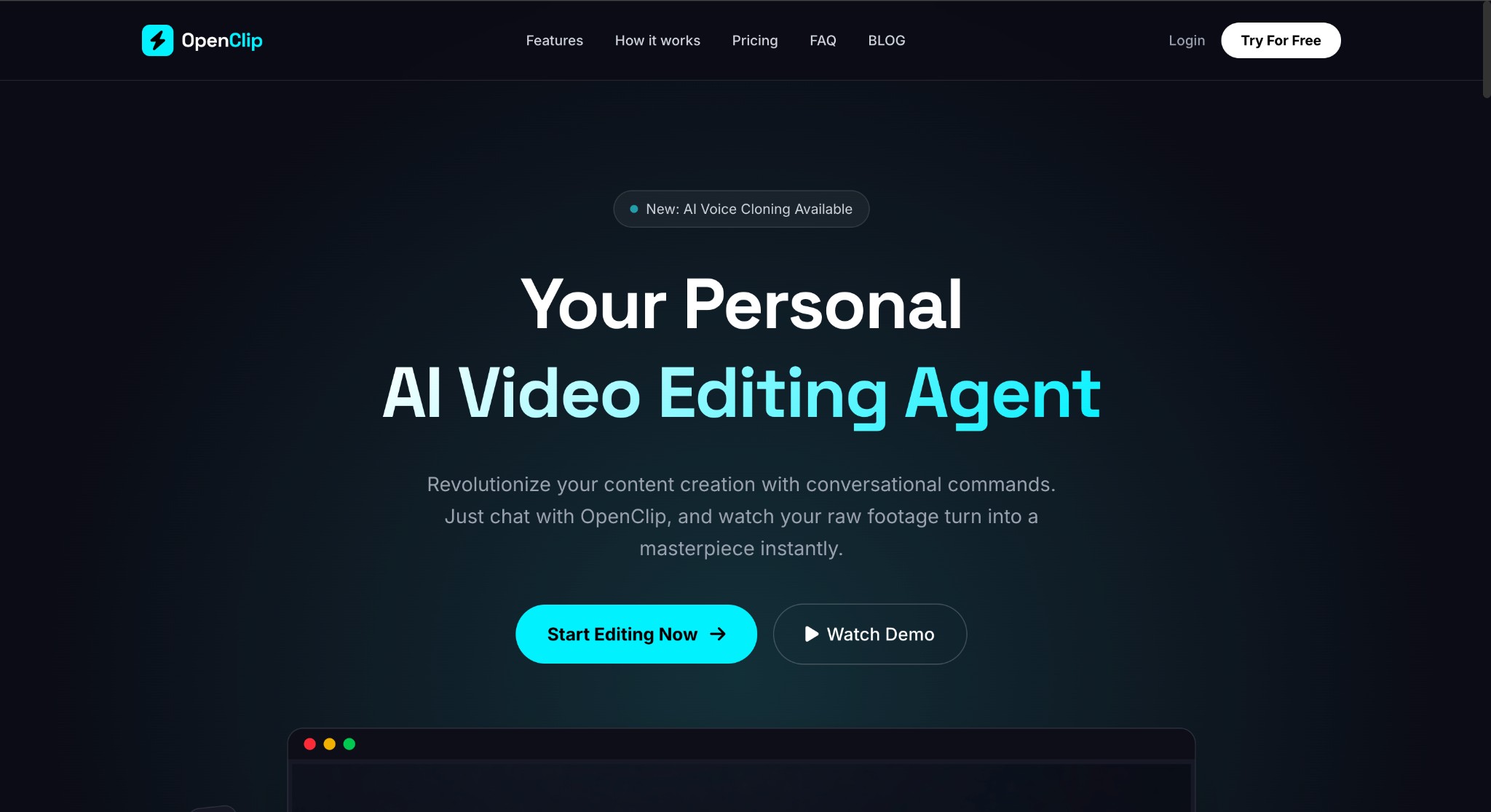
Auraclip introduces a unique "conversational editing" workflow. Users upload raw footage directly to the platform. Instead of manual trimming, you use natural language commands. An AI Agent executes initial edits, such as cutting boring parts or silence.

This transforms the traditional timeline into a chat-based experience. Creators build MVPs faster without scrubbing through hours of video. The interface prioritizes speed and ease of use over complex manual controls.

2. AI Video Editing for Rapid Iteration

AI video editing tools leverage advanced algorithms to handle repetitive duties. The software automates scene detection, clip selection, and basic assembly. This significantly reduces the time creators spend on the initial stages of post-production.

Teams iterate rapidly rather than getting stuck on basic cuts. The technology handles the mechanical aspects of assembly. This allows for faster review cycles and quicker final approvals.


FeatureTraditional WorkflowAI Automated Workflow
Input MethodManual Timeline ScrubbingNatural Language Commands
Task ExecutionHuman-operated cuttingAI Agent automation
Scene SelectionManual reviewAlgorithmic detection
Primary FocusTechnical precisionRapid iteration

3. Content Creation Tools for Small Businesses

Small businesses with limited resources often struggle with video costs. AI-powered content creation tools offer an accessible way to produce professional-looking videos. These platforms remove the need for expensive production teams or high-end hardware.

Companies use these tools to compete. They make good videos. These videos look as good as those from big companies. It's easier for new businesses to start video marketing.

4. Automating Video for Marketing Success

Automating video production streamlines the creation of marketing content. Businesses produce more campaign assets faster than before. This speed allows teams to test different creative approaches in real-time.

Marketing departments improve their overall ROI by identifying winning ads quickly. The software generates variations instantly for A/B testing. This ensures resources go toward the most effective messaging.

5. Enhancing Storytelling with AI Collaboration

The integration of AI tools fosters a unique form of Human-AI collaboration. Content creators enhance their storytelling capabilities by offloading tedious tasks. The machine handles the pixels, while the human directs the vision.

Users focus on narrative, emotion, and audience engagement. This partnership eliminates the fatigue associated with manual editing. The result is a more creative, less mechanical production process.

Key AI Video Editing Software and Tools in 2026

Video production demands speed and precision in 2026. Creators now automate video editing tasks to meet strict content quotas. The market offers specialized tools ranging from text-based editors to avatar generators. These platforms reduce manual labor and accelerate production timelines.

Auraclip: The Conversational Editing Pioneer

Auraclip functions as a conversational editing pioneer. Users issue natural language commands to the software. It converts these verbal instructions into specific actions on the timeline. The tool processes raw footage into rough cuts instantly.

"Auraclip turns raw footage into rough cuts via natural language commands."

This MVP-focused approach suits rapid prototyping. Editors iterate on concepts without touching the timeline manually. It acts as a digital assistant for the initial assembly phase, saving hours on basic cuts.

Descript: Document-Style Editing Powerhouse

Descript treats video files like text documents. Users delete words in the transcript, and the software cuts the corresponding video frames. It includes specific features for silence removal and automatic crossfades.

Creators use the Overdub feature to correct audio errors by typing new text. This eliminates the need for re-recording sessions. The platform streamlines revisions for podcasts and social clips, focusing on text-based control.

InVideo: Template-Driven AI Video Generation

InVideo uses templates to make videos. It has over 1,000 templates. These work for different marketing needs. Users can find stock photos and videos inside the program. AI helps put these pieces together. Marketers can make videos without special skills. The platform is easy to use. It helps create many videos fast.

Synthesia: Realistic Avatar-Based Video Creation

Synthesia focuses on realistic avatar-based video generation. Users input text, and AI avatars deliver the script in multiple languages. This removes the requirement for cameras, actors, or studio space.

Teams collaborate on projects via the cloud interface. Organizations use this for consistent e-learning modules and sales presentations. It ensures uniformity across global communications without scheduling film crews.

Topview AI: All-in-One Video Workflow Simplification

Topview AI simplifies the entire workflow through auto-editing capabilities. Users input reference videos, and the system mimics the pacing and style. It integrates avatar creation tools directly into the editor.

This all-in-one solution targets storytellers and marketers. It handles the technical load, allowing creators to focus on the narrative structure.


SoftwareCore FunctionKey FeaturePrimary Use Case
AuraclipConversational EditingNatural Language CommandsRapid Prototyping
DescriptDocument EditingOverdub & Silence RemovalPodcasts & Social Clips
InVideoTemplate Generation1000+ TemplatesMarketing Assets
SynthesiaAvatar GenerationMulti-language SupportE-learning & Sales
Topview AIWorkflow AutomationReference Video InputStorytelling & Ads

Selecting the right tool depends on specific production needs. Some workflows require the realistic avatars of Synthesia, while others benefit from the text-editing speed of Descript. These platforms collectively redefine efficiency in the 2026 video landscape.

The Future of Video Production: Human-AI Collaboration in 2026

By 2026, AI tools function as partners rather than replacements for human editors. Creators use these systems to expand creative boundaries. Algorithms handle repetitive labor, which allows humans to focus on storytelling. This collaboration opens new paths for experimentation in video generation.

Leveraging AI Tools for Enhanced Creativity

Editors automate video editing tasks like silence removal and clip sorting. This shifts focus from technical execution to narrative flow. AI generates variations rapidly, providing creators with multiple options for a single scene.

Software handles the tedious work. Creators direct the vision. This division of labor results in higher output volume without sacrificing quality.

Bridging the Gap: AI and Traditional Workflows

Platforms like Adobe Premiere Pro and Descript now feature deep AI integration. These workflows merge the control of traditional software with algorithmic speed. Users perform basic rough cuts via text transcripts before applying manual refinements.

This hybrid approach ensures precision. The table below compares traditional methods with AI-integrated workflows.


Workflow StepTraditional MethodAI-Augmented MethodBenefit
Rough CutManual timeline trimmingText-based editingIncreases speed
TranscriptionManual typingInstant Speech-to-TextSaves hours
Color CorrectionManual adjustmentAuto-tone mappingEnsures consistency
Audio MixingManual level adjustmentAuto-duckingReduces noise

The Role of AI in Democratizing Video Creation

High-quality video generation is now accessible to non-experts. Small businesses and marketers produce professional content without large budgets. This technology lowers entry barriers.

People who don't know much about tech can now make complex edits. AI tools give them the power to add advanced transitions and effects. More people can now make digital content and compete.

FAQ (Frequently Asked Questions)

Q1: Is there an app that automatically edits videos?

A1: Yes. Numerous applications leverage AI to process footage automatically. These programs perform specific tasks like cutting silence, applying visual effects, and generating highlight reels.

Q2: How does conversational editing work?

A2: Conversational editing uses natural language commands. You type instructions like "delete the last five seconds," and the AI agent edits the footage. This removes the need for traditional timeline manipulation.

Q3: What are the benefits of automating video editing for small businesses?

A3: Automation reduces production time and costs for small teams. It allows for increased content output and professional-quality results without extensive in-house expertise.

Q4: Can AI tools replace professional video editors?

A4: AI tools automate technical aspects but are unlikely to replace human editors. Human creativity drives nuanced storytelling and complex artistic decisions. Professionals remain essential for crafting unique, emotionally resonant content.

Q5: How can I improve my video production efficiency in 2026?

A5: Adopt AI-powered software and utilize pre-built templates for consistency. Focus on concise storytelling and embrace workflows like conversational editing to eliminate technical bottlenecks.

Conclusion

Video editing automation is real now. It started as a future idea. Now, creators use it. This tech speeds up your work. It makes you more efficient. Your video quality stays high. The software does boring, repeated jobs. You can focus on telling stories. That is what really matters.

To stay competitive, you should explore and integrate AI-powered platforms like Auraclip and Descript into your daily production routine immediately. Leverage these advanced tools to handle technical heavy lifting, while ensuring you refine the final output with your unique, personal human touch. This strategic human-AI collaboration is the ultimate secret to elevating your storytelling and maximizing your marketing efforts.

Don't let outdated, slow manual processes hold back your marketing potential or your creative vision for another moment. Embrace this exciting future of production today and start to automate video editing to unlock unprecedented levels of content creation efficiency. Take the leap right now to elevate your content strategy and watch your audience engagement soar to new heights.


How can automate video editing simplify your content creation process?