
Discover Top AI Video Tools That Prove Their Worth in 2026
 In 2026, video isn't just king – it's the entire kingdom. From your next viral sensation to your most insightful explainer, the hunger for captivating visual stories is insatiable. But let's be honest, crafting polished videos traditionally demands a significant investment of time, skill, and resources. What if you could bypass those hurdles and unlock your creative potential with unprecedented efficiency? Welcome to the revolution powered by Artificial Intelligence. No longer a distant dream, AI video tools are now indispensable allies, dramatically reshaping how content is conceived and produced. This guide is your gateway to discovering the top AI video tools that are not just surviving but thriving, empowering you to create professional-quality videos with remarkable speed and ease. Prepare to explore the groundbreaking features that set these tools apart and understand how they are defining the very future of your content creation journey.
The Dawn of AI-Powered Video Creation: What to Expect in 2026
The video content landscape is set for a dramatic transformation in 2026, driven by the rapid evolution of AI. As platforms witness an explosive growth in video consumption, the demand for high-quality, engaging content from creators is skyrocketing. Traditional video editing software, often hindered by steep learning curves and time constraints, is increasingly being supplemented by AI-driven solutions that democratize production. This shift promises a future where creating professional-grade videos is more accessible and efficient than ever before.
The Evolving Landscape of Content Creation
The surge in video consumption across all platforms necessitates faster and more intuitive content creation workflows. Creators are constantly seeking ways to produce more polished videos with less effort. This is where AI's role becomes pivotal, moving beyond simple editing to encompass the entire creative process.
Why AI Video Tools are No Longer a Niche
AI video tools are rapidly shedding their niche status, becoming indispensable for modern content creators. Platforms like DomoAI, positioned as an "AI Video & Animation Powerhouse," and emerging tools such as Kling AI (2.0), Runway (Gen 4), and Google Veo 2, are setting new benchmarks. These advancements are driven by the focus on generative AI for unique visual elements and sophisticated natural language processing for intuitive control.
Key Trends Shaping AI Video in 2026
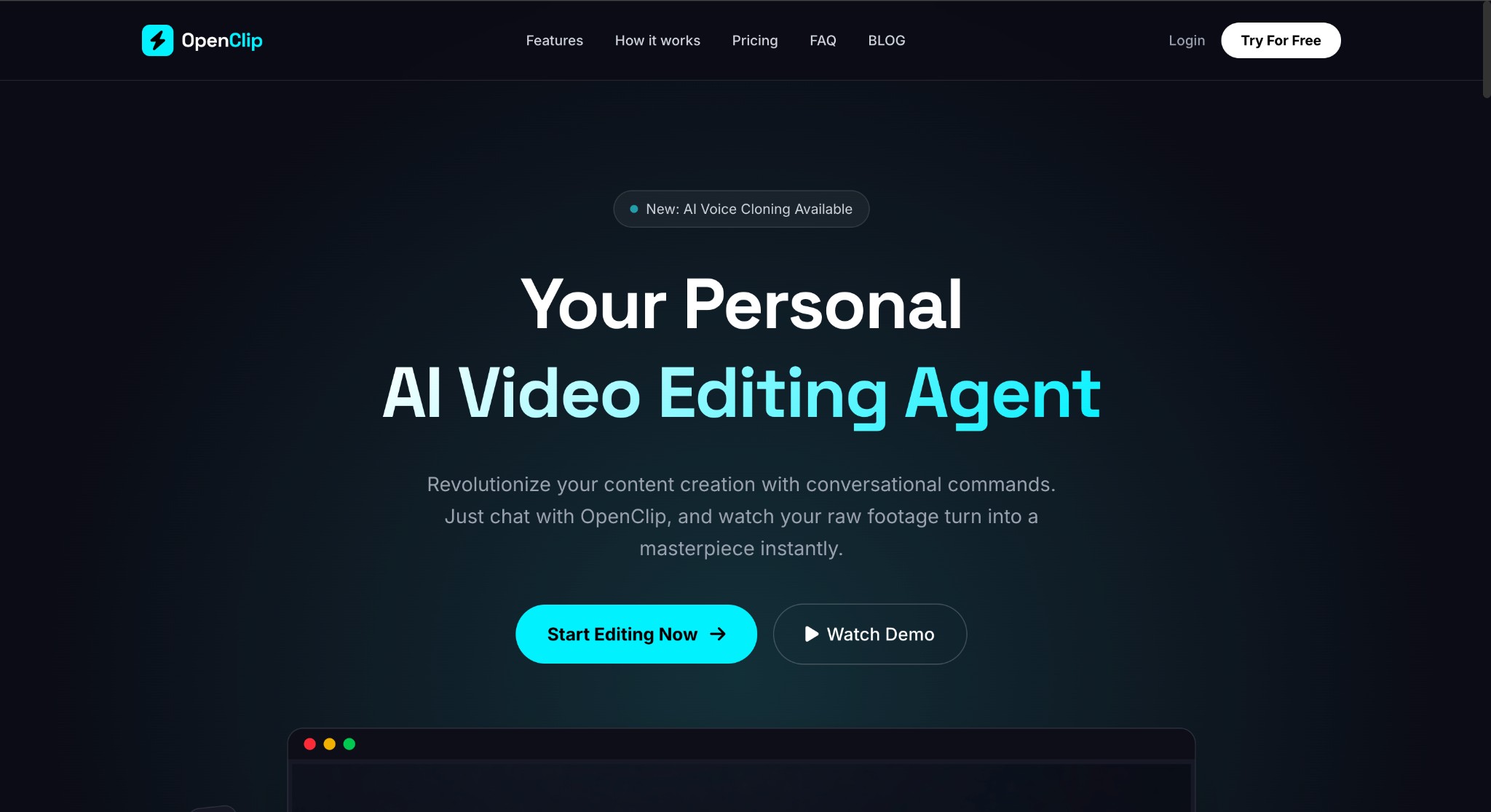
In 2026, expect AI integration across the entire video workflow, from ideation to distribution. This includes advancements like OpenClip, an AI video editing agent that transforms raw footage into professional videos through simple chat commands, automatically removing silence, adding captions, and inserting background music and smart transitions. The emphasis will be on conversational editing and zero-skill video production, making tools like these among the top AI video tools for YouTubers, vloggers, and modern creators.
| Feature | OpenClip (Example) | Traditional Editing |
|---|---|---|
| Editing Interface | Chat Commands | Timeline-based |
| Silence Removal | Automatic | Manual |
| Captioning | Automatic | Manual |
| Background Music | Instant Insertion | Manual Sync |
| Skill Requirement | Zero-based | Extensive |
Understanding the Core Value: What Makes a Top AI Video Tool?
The landscape of content creation is being revolutionized by artificial intelligence, and the emergence of top AI video tools is at the forefront of this transformation. These platforms are redefining how videos are produced, moving beyond traditional editing complexities to offer unprecedented efficiency and creative freedom.
Efficiency and Speed: From Hours to Minutes
A hallmark of leading AI video tools is their ability to drastically cut down production time. Automated processes, such as intelligent editing that sifts through footage to extract key moments, like Wisecut does for viral social media clips, and automatic captioning, transform hours of manual work into minutes. This speed is crucial for creators needing to maintain a consistent output.
Accessibility and Ease of Use: Empowering Non-Editors
These top AI video tools are democratizing video creation. With intuitive interfaces and conversational commands, as exemplified by OpenClip's chat-based editing, the barrier to entry for aspiring content creators is significantly lowered. Users can achieve professional-looking results without needing extensive editing skills, enabling anyone with a story to tell to become a video producer.
Enhanced Creativity and Innovation
Beyond streamlining existing workflows, AI empowers creators with novel possibilities. Tools can generate assets, suggest styles, and even automate complex transitions, unlocking new avenues for artistic expression and pushing the boundaries of visual storytelling.
Cost-Effectiveness and Scalability
By reducing the reliance on expensive software and professional editing teams, these AI solutions offer a more cost-effective approach. This scalability makes high-quality video production accessible to individuals and small businesses, allowing them to compete more effectively in the digital space.
Spotlight on Leading AI Video Tools for 2026
The landscape of content creation is being rapidly reshaped by artificial intelligence, with AI video tools emerging as powerful allies for creators. As we look towards 2026, several platforms are pushing the boundaries, offering unprecedented efficiency and creative possibilities. These tools address specific pain points for content creators, from time-consuming editing tasks to the generation of entirely new visual narratives, solidifying their position as some of the top AI video tools available.
OpenClip: Your Conversational Video Editing Agent
OpenClip is poised to revolutionize video editing for modern content creators. Its core strength lies in its chat-based editing interface, allowing users to transform raw footage into polished videos through simple conversational commands. This means no more wrestling with complex timelines or steep learning curves. OpenClip automates tedious tasks such as silence removal, accurate captioning, and the instant insertion of background music and smart transitions. Furthermore, the platform supports multi-round revisions, enabling creators to refine their videos iteratively without needing any prior editing skills. This makes OpenClip an ideal solution for YouTubers, vloggers, and aspiring content creators who value efficiency and ease of use, turning raw footage into professional-grade content with remarkable speed.
DomoAI: The All-in-One AI Video & Animation Powerhouse
DomoAI stands out as a comprehensive AI video and animation powerhouse, offering a broad spectrum of capabilities. It aims to be a one-stop solution for creators looking to generate and manipulate video content. From animating characters to producing complex visual sequences, DomoAI's extensive feature set caters to a wide range of creative projects, making it a significant player in the AI video generation space.
Runway: Pushing the Boundaries of Generative Video
Runway continues to be at the forefront of generative AI for video. With its advanced features, particularly in its Gen 4 iteration, Runway empowers creators to push the boundaries of visual storytelling. It allows for the creation of entirely novel video content from text prompts or existing images, opening up new avenues for artistic expression and innovative content production.
Kling AI: Innovative Approaches to Video Generation
Kling AI, particularly with its 2.0 advancements, brings innovative approaches to video generation. While specific details of its unique contributions are still emerging, its presence signifies a commitment to exploring novel methods for creating dynamic and engaging video content, further diversifying the options for creators.
Other Notable Contenders and Emerging Technologies
The AI video space is dynamic, with major technology players also making significant strides. Google's Veo 2 represents a notable advancement in AI video generation, showcasing the company's commitment to this field. Similarly, OpenAI's Sora, though still in its developmental stages, has set a high benchmark for realistic and coherent video synthesis. These emerging technologies, alongside established tools, highlight the rapid evolution and increasing sophistication of AI in video production, offering creators a growing arsenal of powerful tools.
These top AI video tools are not just about generating content; they are about democratizing video creation, making professional-quality output accessible to a broader audience. By automating complex processes and offering intuitive interfaces, they empower creators to focus on their message and creativity, ultimately leading to more engaging and impactful content across all platforms.
Deep Dive into Key Features and Functionalities
OpenClip stands out among the top AI video tools by offering a revolutionary approach to content creation, transforming raw footage into polished videos through intuitive chat commands. This platform is engineered to empower modern content creators, from YouTubers to vloggers, by simplifying complex editing tasks and accelerating the production workflow.
Natural Language Processing for Intuitive Control
OpenClip leverages advanced natural language processing (NLP) to enable users to control the editing process via simple chat commands. This conversational interface democratizes video editing, making sophisticated adjustments accessible to anyone, regardless of their technical expertise. Complex tasks like removing filler words or precisely cutting scenes become as easy as typing a request, significantly streamlining the editing experience.
Automated Editing: Silence Removal, Cuts, and Transitions
The impact of automated editing features on video pacing and viewer engagement is profound. OpenClip's automatic silence removal intelligently trims dead air, ensuring a dynamic flow that keeps viewers hooked. Furthermore, its AI-driven smart transitions seamlessly connect different clips, creating a polished and professional aesthetic without manual effort. This efficiency is crucial for creators aiming to maintain audience attention in a crowded digital landscape.
AI-Powered Captioning and Transcription
Accuracy and efficiency are paramount in AI-driven caption generation. OpenClip provides precise transcriptions and captions, enhancing accessibility for a wider audience and boosting SEO potential by making video content discoverable. This feature ensures that your message reaches everyone, regardless of their ability to hear or their preference for silent viewing.
Smart B-roll and Asset Integration
OpenClip's ability to intelligently insert B-roll and other assets, such as background music, instantly adds depth and professionalism to videos. This smart integration ensures that supporting visuals and audio complement the main narrative, contributing to a more engaging and cohesive final product.
Generative AI for Visual Effects and Content Creation
The creative potential of generative AI is unlocked with OpenClip, allowing for the creation of unique visual elements and backgrounds. This opens up new avenues for artistic expression and content differentiation, enabling creators to produce visually striking videos that stand out.
Voice Cloning and AI Voiceovers
The growing importance of AI voice cloning for consistent narration and accessibility cannot be overstated. OpenClip's voice cloning capabilities ensure a uniform and professional voiceover across projects, while also providing an accessible option for creators who may not be comfortable with their own voice or need multilingual support.
Collectively, these features contribute to a significantly streamlined and professional video production process. OpenClip empowers creators to focus on their message and creativity, with the AI handling the technical heavy lifting, making it a truly indispensable tool for modern content creators.
Beyond the Features: User Experience, Security, and Practical Applications
When exploring top AI video tools, user experience, security, and practical applications are paramount. Beyond raw functionality, how intuitive is the interface, and what is the learning curve? Tools like OpenClip, designed as a personal AI video editing agent, excel by transforming footage through simple chat commands, making advanced editing accessible without requiring prior skills. Reliable performance and consistent output quality are crucial for creators.
Navigating Security and Privacy in AI Video Tools
Understanding data privacy policies and intellectual property considerations is vital. While specific details for every tool vary, users should investigate how their footage and generated content are handled. For instance, OpenClip's focus on a conversational editing process implies a user-centric approach to data management, aiming to simplify content creation for YouTubers and vloggers.
Real-World Use Cases for Different Creator Types
AI video tools offer diverse applications. Social media managers can leverage them to quickly produce engaging clips, marketers can streamline campaign video creation, and educational content creators can generate explanatory videos efficiently. Strategies for integrating these tools often involve boosting output and engagement by combining AI-powered features with traditional editing software for maximum flexibility.
The Importance of a Seamless User Experience
A seamless user experience is critical for the adoption and effectiveness of any software, especially for content creators who juggle multiple tasks. Top AI video tools that prioritize an intuitive interface and a low learning curve allow users to focus on creativity rather than struggling with complex functionalities. This translates to faster turnaround times and higher quality output.
Integrating AI Video Tools into Existing Workflows
Successfully integrating AI video tools into existing workflows requires strategic planning. The goal is to augment, not replace, current processes, leveraging AI for its strengths in automation and speed.
FAQ (Frequently Asked Questions)
Q1: What are the primary benefits of using AI video tools in 2026?
A1: The primary benefits include significant time savings through automated editing, increased accessibility for users without extensive technical skills, enhanced creativity with AI-generated assets and effects, and cost-effectiveness compared to traditional production methods.
Q2: How do AI video tools like OpenClip simplify the editing process?
A2: Tools like OpenClip simplify editing by using natural language processing, allowing users to make edits through simple chat commands. They automate tasks such as silence removal, captioning, and the insertion of music and transitions, eliminating the need for complex timeline manipulation.
Q3: Are AI video tools suitable for beginners, or do they require prior editing experience?
A3: Many AI video tools, particularly those with conversational interfaces like OpenClip, are designed to be beginner-friendly. They significantly lower the barrier to entry, enabling individuals with no prior editing experience to create professional-looking videos.
Q4: What are the key considerations regarding data security and privacy when using AI video platforms?
A4: It's crucial to review the privacy policies of any AI video tool. Users should understand how their footage, generated content, and personal data are stored, used, and protected. Opt for platforms that clearly outline their security measures and commitment to user privacy.
The Future of AI Video: What's Next for Content Creators?
The landscape of video creation is rapidly transforming, with AI poised to revolutionize how content is produced and consumed. Advanced AI video tools are no longer just novelties; they are becoming essential for creators.
Predictive Editing and Content Optimization
AI’s potential to predict audience engagement will enable creators to optimize edits, ensuring maximum impact. Tools like OpenClip, an AI video editing agent, can automatically remove silence and add captions, transforming raw footage into polished videos with simple chat commands.
Hyper-Personalization of Video Content
The future also holds hyper-personalization, with AI dynamically tailoring video content to individual viewer preferences.
The Rise of AI-Assisted Storytelling
AI is emerging as a co-creator, suggesting narratives and visual styles to enhance storytelling.
Ethical Considerations and Responsible AI Development
This evolution necessitates a dialogue around AI bias, copyright, and the future of creative professions. Creators must stay informed and adapt to these advancements.
In conclusion, 2026 is undeniably the year where AI has truly revolutionized video creation, transforming it from a complex endeavor into an accessible art form. Tools like OpenClip are dismantling the intimidation factor with their user-friendly, conversational approaches, while the generative prowess of platforms such as DomoAI and Runway are unlocking unprecedented creative potential. These top AI video tools are no longer mere novelties; they are essential instruments for anyone aiming to make their mark in the digital landscape.
For aspiring YouTubers, seasoned vloggers, savvy marketers, and indeed, any individual or business looking to leverage the compelling power of video, the message is clear: embrace these advancements. Don't let technical hurdles or resource limitations hold back your vision. Start experimenting with these top AI video tools today. Explore their features, integrate them into your workflow, and witness firsthand how they can amplify your storytelling capabilities, boost your engagement, and ensure your content remains not just relevant, but vibrantly impactful. The future of compelling video content is here, and it's powered by AI – so dive in and create something extraordinary!
Conclusion
As we've explored, the landscape of video creation in 2026 is irrevocably shaped by the power of AI. These cutting-edge tools are no longer mere novelties; they are essential accelerators, democratizing professional video production and unleashing unprecedented creative possibilities. From generating hyper-realistic footage to intelligently editing and personalizing content, AI video tools are proving their worth by saving time, reducing costs, and elevating the quality of output across the board. Whether you're a seasoned marketer, an independent creator, or a business looking to enhance its visual communication, embracing these AI solutions is no longer optional – it's a strategic imperative for staying competitive and impactful in the digital age.
Ready to transform your video strategy? Explore the AI video tools discussed and start creating your next masterpiece today!