
Choosing Your AI Video 2026 Assistant for Content Creation Success
 The future of content creation is arriving faster than you think. By 2026, artificial intelligence will be an indispensable ally for anyone looking to make their mark in the video landscape. Imagine effortlessly producing polished, professional-quality videos for YouTube, captivating TikToks, or impactful marketing campaigns, all without the steep learning curve or time commitment of traditional editing. This isn't science fiction; it's the reality that an advanced AI video 2026 assistant can unlock for you.
As AI's capabilities in video production explode, understanding which tools will best serve your creative vision and streamline your workflow becomes paramount. This article will guide you through the essential features to seek in your AI video companion for 2026, exploring how innovations like OpenClip are revolutionizing the process with intuitive, chat-driven editing, transforming how you bring your stories to life.
The Evolving Landscape of AI Video Creation in 2026
The year 2026 marks a significant inflection point for AI video creation, driven by rapid technological advancements and escalating market demands. AI's transformative impact is already reshaping industries, with content creation at the forefront.
The Rise of AI in Content Creation
AI is democratizing sophisticated creative processes. Tools like OpenClip, an AI video editing agent, exemplify this shift, enabling users to transform raw footage into professional videos via simple chat commands. This includes automated silence removal, caption generation, and the insertion of background music and smart transitions, all without requiring extensive editing skills. This accessibility is crucial for individuals and small businesses.
Why 2026 is a Pivotal Year for AI Video
By 2026, AI video generation and editing are projected to see substantial leaps in sophistication and ease of use. This evolution is directly tied to the growing demand for efficient video production. As evidenced by projections that GenAI creative will reach 40% of all ads by 2026, with small and mid-tier brands adopting it faster than larger ones, the industry is embracing AI for speed and quality.
The Growing Demand for Efficient Video Production
Platforms like YouTube and TikTok necessitate a constant stream of engaging video content. AI offers a solution to this demand, empowering creators to produce high-quality videos rapidly. The ability to make multi-round revisions effortlessly, as offered by tools like OpenClip, further streamlines the workflow, making professional-grade AI video 2026 production a reality for a wider audience.
Understanding Your Needs: What Makes a Great AI Video Assistant?
As we look towards AI video 2026, identifying the right AI video assistant hinges on a clear understanding of your personal and professional content creation goals. Moving beyond traditional editing, these tools promise efficiency and accessibility for modern creators.
Defining Your Content Goals and Target Audience
Before selecting an AI video assistant, pinpoint your content objectives. Are you aiming for engaging vlogs, informative tutorials, or compelling advertisements? Each content type has unique requirements for pacing, visual elements, and overall tone. Understanding your target audience—whether they are general viewers, industry professionals, or niche enthusiasts—will further guide your feature prioritization. For instance, a younger audience might respond better to dynamic transitions and trending music, while a professional audience may value clear, concise editing and sophisticated graphics.
Assessing Your Current Skillset and Time Constraints
The landscape of video creation is evolving rapidly. Traditional video editing demands technical proficiency and significant time investment. In contrast, AI-assisted workflows, like those offered by OpenClip, empower users with minimal editing skills. OpenClip, for example, transforms raw footage into professional videos via simple chat commands, automating tasks such as silence removal and caption generation. This conversational approach to editing significantly reduces the learning curve and expedites the production process, making it ideal for creators with limited time or technical expertise.
Key Features to Look For in an AI Video Assistant
When evaluating AI video assistants, prioritize features that align with your needs. Ease of use is paramount, especially for beginners. Look for intuitive interfaces and natural language processing capabilities, allowing you to edit with simple voice or text commands. Editing speed is another critical factor; AI assistants should significantly reduce turnaround times. Customization options are also important, ensuring you can still imbue your unique brand style into the final product. Finally, output quality should not be compromised. Features like intelligent B-roll insertion, AI-generated captions, and synchronized background music, as seen in OpenClip's functionality, contribute to a polished, professional final video, making AI video 2026 a reality for more creators.
Introducing OpenClip: Your Conversational AI Video Editing Agent
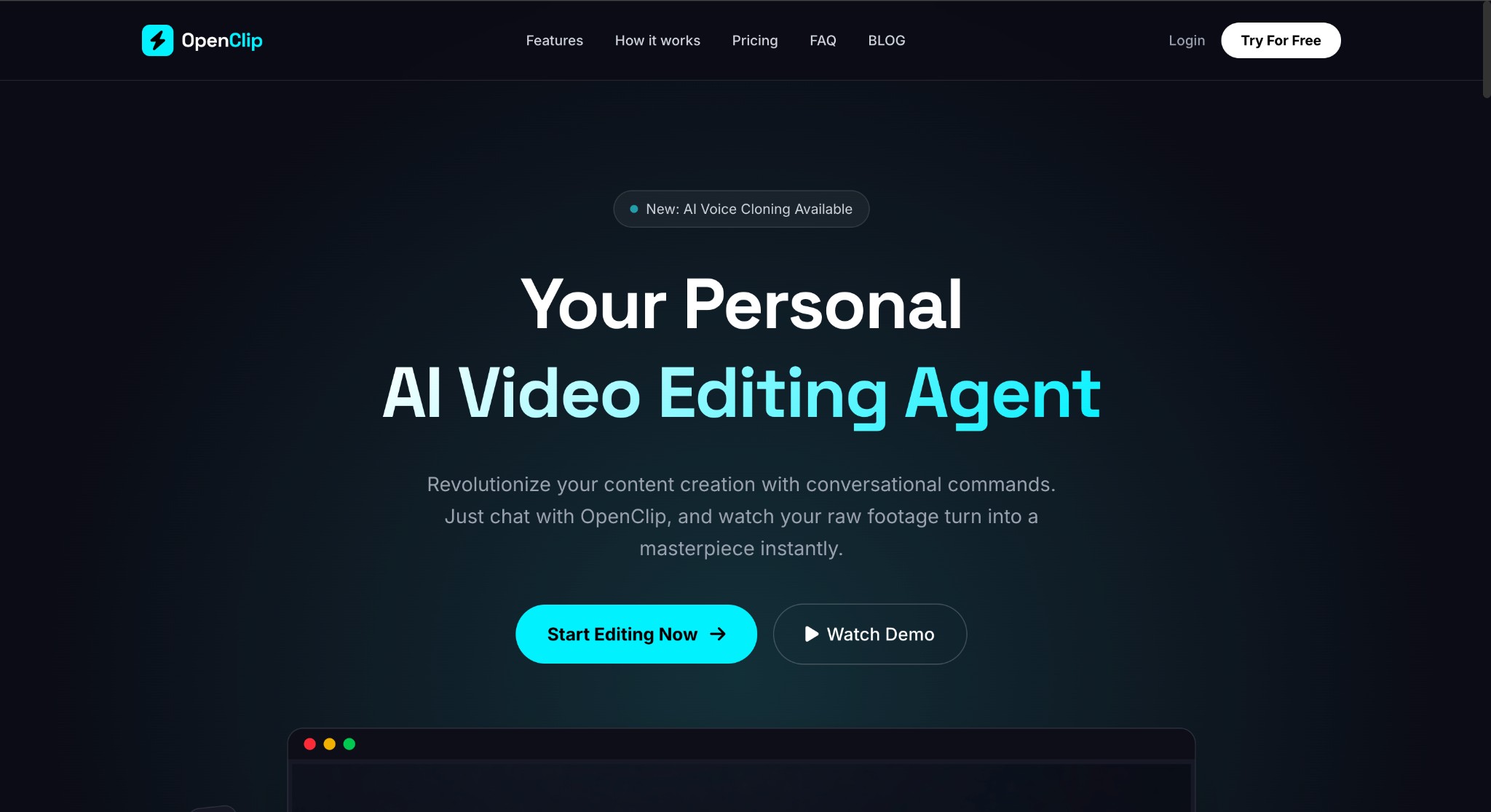
OpenClip is poised to revolutionize content creation by transforming raw footage into polished videos through the intuitive power of chat commands. Imagine a personal AI video editing agent that understands your creative vision, making complex editing tasks as simple as sending a text message. This innovative approach democratizes video production, offering a seamless experience for creators of all skill levels. As the demand for engaging video content continues to surge, tools like OpenClip are essential for staying ahead, especially with the projected growth in AI video applications by AI video 2026.
The Power of Chat-Based Video Editing
OpenClip’s unique selling proposition lies in its conversational interface. Instead of navigating intricate timelines and toolbars, users simply type their desired edits. This natural language processing allows creators to focus on their message and storytelling, rather than wrestling with technicalities. This shift is particularly beneficial for YouTubers and vloggers who need to produce content efficiently.
Core Functionalities: From Raw Footage to Polished Video
This AI video editing agent excels at automating tedious processes. Key functionalities include automatic silence removal, ensuring viewers remain engaged without unnecessary pauses. Furthermore, OpenClip generates captions automatically, enhancing accessibility and watchability across platforms. The agent also intelligently inserts background music and applies smart transitions, instantly elevating the professional polish of your videos.
Key Features for Streamlined Content Creation
OpenClip empowers creators with multi-round revision capabilities, allowing for iterative refinement without requiring advanced editing skills. This means you can experiment with different styles and cuts until your video is perfect. OpenClip acts as your personal AI video editing agent, streamlining the entire workflow from initial footage to final export, making it an indispensable tool for modern content creators aiming for high-quality output in the evolving landscape of AI video 2026.
Practical Applications and Use Cases with OpenClip
OpenClip is poised to revolutionize content creation by leveraging advanced AI video capabilities, making professional video production accessible to a wider audience. As we look towards AI video 2026, tools like OpenClip will empower creators to streamline workflows and enhance output significantly.
For YouTubers and Vloggers: Effortless Content Production
YouTubers and vloggers can dramatically boost their productivity with OpenClip. By simply using chat commands, they can transform raw footage into polished videos, automatically removing silence and adding captions. This significantly saves time and allows for increased content output, a crucial factor for consistent audience engagement.
For Small Businesses and Advertisers: High-Impact Video Ads
The IAB predicts a significant rise in AI-generated video ads, with small and mid-tier brands leading adoption. OpenClip offers these businesses the potential to create professional, high-impact video ads rapidly and affordably, leveling the playing field against larger competitors. This democratizes high-quality advertising, enabling more businesses to connect with their audiences effectively.
For Educators and Trainers: Engaging Instructional Videos
Creating clear and concise educational content becomes effortless with AI-powered editing. OpenClip can help educators and trainers produce engaging instructional videos by automating tedious tasks, ensuring that learning materials are presented effectively and professionally, thus improving knowledge retention.
Beyond the Basics: Exploring Advanced AI Video Capabilities
OpenClip's capabilities extend to advanced AI video functions. This includes smart B-roll insertion to enhance visual storytelling, AI-generated montages for dynamic content, and the crucial role of AI in synchronizing background music and voiceovers seamlessly. These features enable multi-round revisions without requiring extensive editing skills, making professional-grade video creation a reality for all.
Beyond the Edit: Security, Privacy, and User Experience
As we look towards AI video 2026, the integration of AI in video creation, exemplified by tools like OpenClip, extends far beyond simple editing. Ensuring robust security and privacy, coupled with an intuitive user experience, is paramount for widespread adoption.
Ensuring Data Security and Content Privacy
For tools like OpenClip, which transform raw footage into professional videos via chat commands, addressing potential concerns about data privacy is crucial. Users entrust their original content and creative vision to these AI agents, necessitating secure data handling and clear privacy policies. This builds confidence, especially for creators concerned about intellectual property and personal data.
The Importance of a Seamless User Experience
The value of intuitive interfaces and natural language processing, as seen in OpenClip's conversational editing approach, cannot be overstated. For YouTubers, vloggers, and modern content creators, a positive user experience means effortless transformation of footage without requiring extensive editing skills. This democratizes professional video production.
Reliability and Technical Capabilities of AI Video Tools
AI video assistants like OpenClip contribute significantly to overall content creation efficiency and reliability. The importance of robust AI models is evident in their ability to consistently deliver high-quality output, from automatic silence removal and caption generation to smart transitions and background music synchronization. These capabilities streamline workflows, making advanced video production accessible to a broader audience by AI video 2026.
Making the Right Choice: Choosing Your AI Video Assistant for 2026
The landscape of AI video editing is rapidly evolving, making the selection of the right tool crucial for content creators aiming for efficiency and professional output in 2026. As AI capabilities expand, choosing a solution that aligns with your specific needs and future workflow is paramount.
Comparing AI Video Editing Solutions
When evaluating AI video assistants, consider factors beyond just core editing features. Cost, scalability, and seamless integration with your existing production pipeline are vital. While many tools offer automated tasks like captioning and silence removal, the true value lies in their ability to adapt. For instance, OpenClip acts as a personal AI video editing agent, transforming raw footage into polished videos through simple chat commands. This conversational approach, coupled with features like automatic silence removal, captioning, background music insertion, and smart transitions, significantly lowers the barrier to entry for creating professional content. The ability to perform multi-round revisions without requiring extensive editing skills is a key differentiator, especially for YouTubers and vloggers.
Factors to Consider Beyond Core Features
Beyond the immediate editing functions, the long-term viability of an AI video assistant hinges on its support and development. Continuous updates from providers are essential to keep pace with emerging AI advancements and evolving platform requirements. Reliable support ensures that any technical hurdles are addressed promptly, minimizing disruption to your content creation schedule. For creators looking to stay ahead, embracing AI video assistants like OpenClip is not just about current efficiency but also about future-proofing their digital media workflow.
Future-Proofing Your Content Creation Workflow
The integration of AI into video production is set to become even more sophisticated by 2026. Tools that offer intuitive, natural language interaction and robust AI-driven automation, such as OpenClip, are paving the way for a more accessible and efficient content creation future. By adopting these advanced AI video solutions now, creators can better navigate the dynamic digital media landscape and consistently produce high-quality content.
FAQ (Frequently Asked Questions)
Q1: What are the primary benefits of using an AI video assistant by 2026?
A1: By 2026, AI video assistants will offer significant benefits including dramatically reduced editing time, democratized access to professional-quality video production for individuals and small businesses, automated tasks like captioning and silence removal, and the ability to produce more content more consistently. This leads to increased efficiency, cost savings, and enhanced creative output.
Q2: How does conversational editing, like that offered by OpenClip, change the video creation process?
A2: Conversational editing transforms the video creation process by allowing users to make edits using simple text or voice commands, akin to chatting with an assistant. This eliminates the need for complex timelines and technical editing skills, making it accessible to anyone who can communicate their desired changes. It shifts the focus from technical execution to creative vision.
Q3: Will AI video assistants replace human editors by 2026?
A3: While AI video assistants will automate many tasks and empower a wider range of creators, they are unlikely to entirely replace human editors. Human editors will continue to be essential for complex creative direction, nuanced storytelling, and highly specialized projects. AI assistants will likely become powerful tools that augment, rather than replace, human expertise, leading to more collaborative workflows.
Q4: What are the key features to look for when choosing an AI video assistant for 2026?
A4: When choosing an AI video assistant, prioritize ease of use, editing speed, customization options, and overall output quality. Look for features like natural language processing for intuitive editing, automatic silence removal, AI-generated captions, intelligent B-roll insertion, and seamless background music synchronization. The ability to perform multi-round revisions easily is also a significant advantage.
Conclusion: Charting Your Course to Content Creation Dominance in 2026
As we stand on the cusp of 2026, the integration of AI video 2026 assistants is no longer a speculative future but a vital imperative for anyone serious about content creation success. The era of manual, time-consuming video production is rapidly fading, replaced by intelligent tools that democratize professional-grade output. As demonstrated, platforms like OpenClip are at the forefront, offering revolutionary conversational editing, seamless automatic enhancements, and efficient multi-round revision capabilities. These features empower both seasoned professionals and emerging creators to achieve remarkable results with unparalleled ease and velocity.
The key to unlocking this potential lies in a strategic approach. Embrace the power of AI video 2026 by first meticulously assessing your unique content creation needs. Are you prioritizing speed, intricate editing, or innovative storytelling? Once your requirements are clear, diligently evaluate the diverse range of AI video assistants available, focusing on their specific functionalities and how they align with your goals. Choosing the right AI companion is not merely about optimizing workflows; it’s about forging a partnership that fuels your creative vision and ensures your content not only keeps pace but thrives in the ever-evolving digital landscape. Don't get left behind – start exploring your AI video assistant options today and prepare to redefine your content creation trajectory for a successful 2026 and beyond!