
Discover the Top AI Video Tools for Creators in 2026
 The year 2026 isn't just another calendar flip; for content creators, it's the dawn of a new era in video production. As the hunger for compelling video content intensifies, traditional barriers of time and complex editing software are finally crumbling, thanks to the relentless march of Artificial Intelligence. Are you ready to unlock unprecedented creative potential and supercharge your workflow? This guide dives deep into the top AI video tools that are set to redefine what's possible for creators like you. We'll explore how these revolutionary platforms streamline every stage of your production, from ideation to final polish, democratizing high-quality video creation. Prepare to discover indispensable functionalities, cutting-edge innovations like OpenClip, and practical strategies to transform your content and captivate your audience like never before.
The AI Video Revolution: Why Creators Need Smart Tools in 2026
The demand for engaging video content is exploding across all platforms. Creators face immense pressure to consistently deliver high-quality productions, a task often hampered by the limitations of traditional video editing software. This is where AI steps in, democratizing video creation and empowering creators with unprecedented speed and ease. As we look to 2026, the evolution of top AI video tools is set to redefine content creation.
The Evolving Landscape of Content Creation
The sheer volume of video content being consumed necessitates faster, more efficient production workflows. Creators are no longer just editors; they are storytellers, marketers, and community builders. Traditional tools, while powerful, can be time-consuming and require a steep learning curve. This bottleneck hinders consistent output and innovation.
The Rise of AI in Video Editing
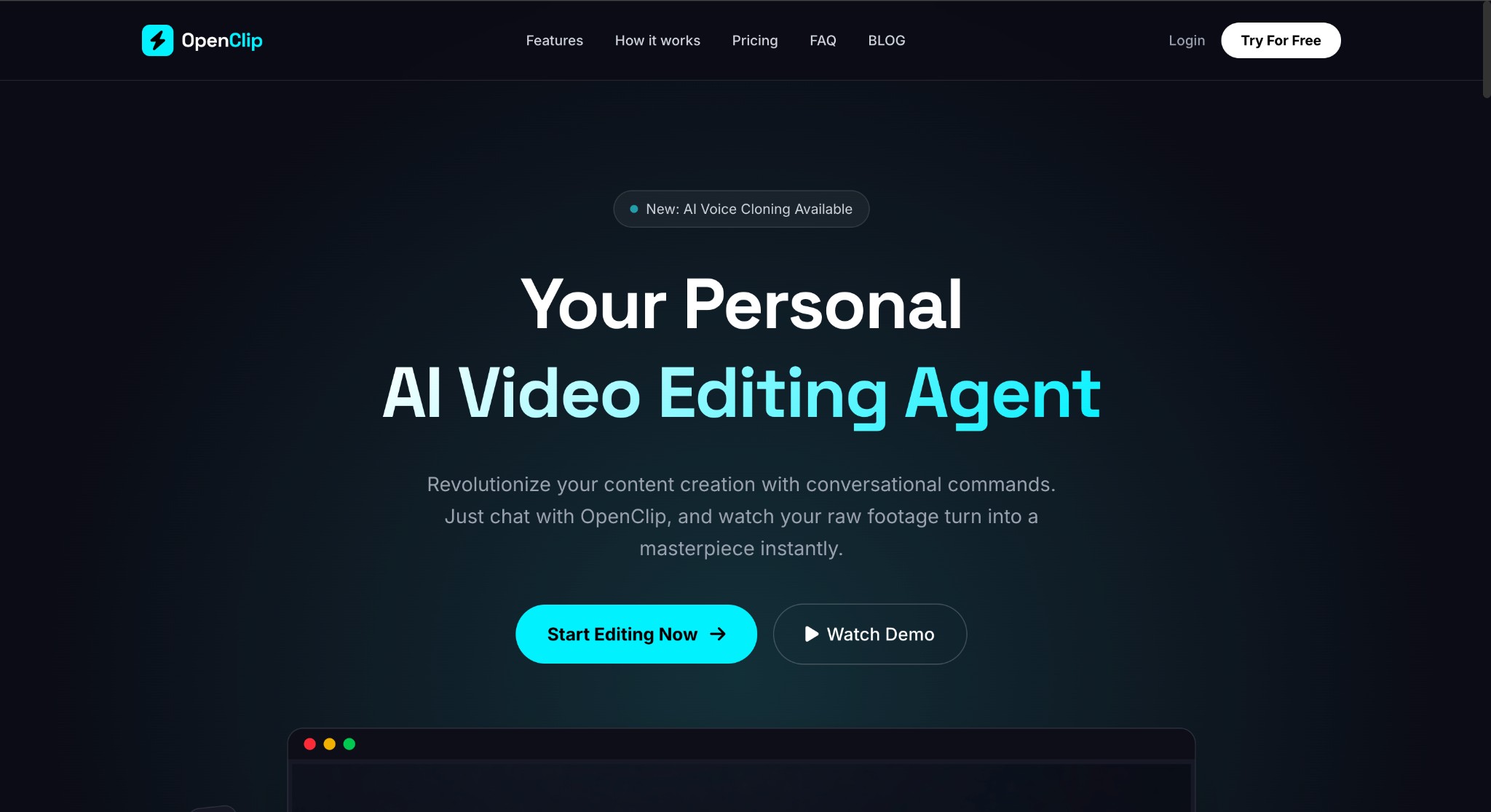
AI is rapidly transforming video editing from a technical chore into an intuitive, conversational experience. Tools like OpenClip are emerging as personal AI video editing agents, enabling users to transform raw footage into professional videos through simple chat commands. Features such as automatic silence removal, instant caption generation, background music insertion, and smart transitions significantly reduce manual effort. This allows creators to focus on their narrative and creative vision, rather than getting bogged down in technicalities.
What to Expect from Top AI Video Tools in 2026
By 2026, expect AI video tools to offer even more sophisticated automation and generation capabilities. Conversational editing, where users can revise videos through natural language prompts, will become standard. Advanced AI will also drive the creation of more complex animations and visual effects, pushing the boundaries of what's possible for independent creators. Leading platforms like DomoAI, Kling AI (2.0), Runway (Gen 4), Google Veo 2, OpenAI Sora, and Pika 2.2 are paving the way, offering increasingly powerful solutions for both editing and generation. The integration of AI into a seamless, user-friendly workflow is key for any creator aiming to stand out.
Understanding the Core of AI Video Editing: Key Features to Look For
The landscape of video creation is rapidly evolving, moving beyond complex manual timelines. Modern content creators, especially YouTubers and vloggers, are seeking intuitive ways to transform raw footage into polished videos efficiently. This shift is driven by the emergence of AI-powered editing tools that automate tedious tasks and introduce new creative possibilities. Understanding the core features of these top AI video tools is crucial for maximizing your content creation workflow.
Conversational Editing: The Power of Natural Language
The most significant advancement is the shift from manual timeline manipulation to intuitive chat-based commands. Instead of dragging and dropping clips, users can now interact with their video editor like a personal assistant. Imagine simply typing "remove all silences" or "cut out filler words like 'um' and 'uh'," and seeing the video instantly updated. This conversational editing approach democratizes video production, making it accessible to creators without deep technical skills. For example, a vlogger can quickly refine their monologue by asking the AI to "tighten up the pacing" or "focus on the key points," streamlining the editing process significantly.
Automated Workflows: From Raw Footage to Polished Video
AI excels at automating repetitive tasks, freeing up creators to focus on storytelling. Features like automatic silence removal, filler word elimination, and AI-powered caption generation are game-changers. These tools can take raw, unedited footage and, with a few simple commands, produce a clean, engaging video ready for distribution. For instance, OpenClip, an AI video editing agent, can automatically remove silences and add captions, transforming unedited recordings into professional-looking content with minimal effort. This automation is invaluable for YouTubers needing to produce content consistently.
Intelligent Content Enhancement: Music, Transitions, and Captions
Beyond basic editing, AI can intelligently enhance your videos. This includes automatically synchronizing background music to match the video's mood or pacing, and inserting smart transitions that seamlessly connect different scenes. AI can also generate accurate captions, improving accessibility and watchability. For content creators, this means achieving a professional polish without needing to spend hours searching for the perfect music or meticulously crafting transitions. The ability to instantly insert background music and smart transitions, as offered by tools like OpenClip, significantly boosts production value.
Multi-Round Revisions: Iterative Improvement Made Easy
The iterative nature of content creation is further simplified by AI. Multi-round revisions allow creators to refine their videos through a series of adjustments without the steep learning curve associated with traditional editing software. This means you can easily request changes, experiment with different edits, and perfect your video through a series of conversational prompts. This iterative improvement, made easy without needing deep technical skills, is a core benefit, enabling YouTubers and vloggers to achieve their desired outcome efficiently.
Spotlight on Innovation: Leading AI Video Tools in 2026
The landscape of content creation is being dramatically reshaped by artificial intelligence, with AI video tools emerging as indispensable assets for creators. In 2026, these platforms are moving beyond simple generation to offer sophisticated editing capabilities, democratizing professional video production. This evolution is driven by tools that understand natural language and automate complex tasks, making video creation accessible to everyone.
OpenClip: Your Personal AI Video Editing Agent
OpenClip stands out as a revolutionary AI video editing agent, fundamentally changing how raw footage is transformed into polished, professional videos. Its core value proposition lies in its ability to interpret simple chat commands, allowing users to direct the editing process through natural language. This innovative approach effectively eliminates the steep learning curve associated with traditional video editing software. OpenClip's feature set is designed for maximum efficiency and creative control, boasting automatic silence removal to streamline pacing, instant caption generation for enhanced accessibility, and seamless background music insertion that syncs perfectly with the content. Furthermore, it offers smart transitions that add a professional flair and supports multi-round revisions, ensuring creators can fine-tune their videos until they achieve their desired outcome – all without requiring any prior editing skills. For YouTubers, vloggers, and modern content creators, OpenClip is positioned as the ultimate content creation tool, promising to significantly boost productivity and output quality.
Other Notable AI Video Editing Solutions
While OpenClip offers a unique conversational editing experience, the broader market features several other established and promising AI video tools and generators. DomoAI is recognized as a comprehensive "One-Stop AI Video & Animation Powerhouse," suggesting broad capabilities in both video creation and animation. Runway (Gen 4) and Pika 2.2 are prominent AI video generators known for their continuous advancements in generating realistic and dynamic video content. Kling AI (2.0) also features in this category, likely offering enhanced generation quality and control. Google's Veo 2 represents a significant development from a major tech player, indicating robust research and development in AI video. These platforms, while differing in their primary focus – some leaning towards generation, others towards editing – collectively contribute to the advancement of AI in video production, offering creators a diverse toolkit to explore.
Emerging AI Video Generation Platforms
The rapid pace of innovation in AI video generation is truly remarkable. Platforms like Runway, Pika, and Kling AI are pushing the boundaries of what's possible, enabling users to create complex scenes and animations from text prompts. Google's Veo 2 is another significant contender, leveraging extensive AI research to offer advanced generation capabilities. These emerging platforms, alongside established players and specialized tools like OpenClip, are democratizing video creation. They allow individuals and businesses to produce high-quality video content with unprecedented ease and speed, making them essential for anyone looking to stay ahead in the digital content space and explore the top AI video tools available.
In summary, 2026 is set to be a pivotal year for AI video tools. OpenClip's conversational editing approach, combined with the powerful generation capabilities of platforms like Runway, Pika, Kling AI, and Google Veo, offers creators an unprecedented level of control and efficiency. The accessibility and sophistication of these top AI video tools are transforming content creation, making professional-quality video production achievable for a wider audience than ever before.
Practical Applications and Use Cases for AI Video Tools
The landscape of content creation is being rapidly transformed by advancements in AI, with top AI video tools offering unprecedented efficiency and creative possibilities. These intelligent solutions are no longer just experimental; they are becoming essential components for individuals and businesses looking to produce high-quality video content with minimal effort and expertise.
Streamlining YouTube and Vlogging Workflows
For YouTubers and vloggers, tools like OpenClip are revolutionizing how raw footage is transformed into polished videos. By leveraging simple chat commands, creators can automate time-consuming tasks such as removing silences, adding captions, inserting background music, and applying smart transitions. This drastically reduces editing time, allowing creators to focus more on content strategy and engagement. For instance, a talking head video or a tutorial can be edited in a fraction of the time it would take manually, enabling more frequent uploads and a more dynamic workflow.
Enhancing Social Media Content Creation
The demand for engaging short-form content across platforms like TikTok, Instagram Reels, and YouTube Shorts is immense. AI video tools excel at this, automatically identifying key moments and repurposing longer videos into concise, attention-grabbing clips. This capability is crucial for maintaining a consistent social media presence and capturing audience attention in a crowded digital space.
AI for Business and Marketing Videos
Businesses can leverage AI to generate professional-looking marketing videos, product demos, and explainer videos with remarkable ease. These tools can create polished visuals and compelling narratives without requiring extensive technical skills or expensive production crews. This democratization of video production empowers small businesses and startups to compete effectively with larger enterprises.
Accessibility and Inclusivity through AI
A significant benefit of AI in video is its role in enhancing accessibility. AI-generated captions and transcriptions make video content understandable for individuals with hearing impairments or those in noisy environments. Furthermore, AI can assist in generating content that is more inclusive and representative, broadening the reach and impact of video messages.
Choosing the Right AI Video Tool: Factors Beyond Features
When evaluating the plethora of top AI video tools, moving beyond just a feature checklist is crucial for making an informed decision. The right tool should seamlessly integrate into your workflow, offer long-term value, and prioritize your data's security.
User Experience and Ease of Integration
The intuitiveness of an AI video tool's user interface significantly impacts its adoption. A steep learning curve can negate the efficiency gains AI promises. For instance, a tool like OpenClip, designed as a conversational AI video editing agent, aims to simplify the process through chat commands, making it accessible even without prior editing skills. This focus on natural language interaction drastically reduces the barrier to entry, allowing creators to transform raw footage into professional videos with ease, supporting multi-round revisions without complex editing knowledge.
Cost-Effectiveness and Scalability
Beyond initial purchase or subscription fees, consider the pricing models. Are you looking at a monthly subscription, a pay-as-you-go system, or tiered plans? For freelancers and small businesses, flexible pricing that scales with usage is often more beneficial. Understanding how the tool handles different video lengths or export resolutions can also impact long-term costs and ensure it aligns with your budget and project scope.
Security, Privacy, and Data Handling
For professional creators and businesses, how an AI video tool handles your raw footage and generated content is paramount. Understanding their data privacy policies, encryption methods, and where your data is stored is essential. Tools should clearly outline their commitment to protecting user data, especially when dealing with sensitive or proprietary material.
The Future of AI in Video Creation
The landscape of AI video creation is rapidly evolving. We can anticipate more sophisticated AI cloning capabilities, enabling hyper-realistic digital avatars or voice replication. Advanced montage creation, driven by AI that understands narrative flow and emotional impact, will likely become commonplace. Tools will continue to push boundaries, offering more intuitive control and professional-grade results, making advanced video production accessible to a wider audience.
FAQ (Frequently Asked Questions)
Q1: What is conversational AI editing in video tools?
A1: Conversational AI editing allows users to edit videos using natural language commands, similar to talking to a personal assistant. Instead of complex timeline manipulations, you can simply type requests like "remove silences" or "add a transition here," and the AI will perform the edits automatically.
Q2: Are AI video tools suitable for beginners with no editing experience?
A2: Yes, many AI video tools are specifically designed to be user-friendly for beginners. Tools like OpenClip, with their conversational interfaces and automated features, significantly lower the barrier to entry, making professional-quality video editing accessible without prior experience.
Q3: How can AI video tools help with social media content creation?
A3: AI video tools can automate the process of creating engaging short-form content for social media. They can identify key moments, repurpose longer videos into concise clips, add captions, and even suggest background music, helping creators maintain a consistent and impactful presence across platforms like TikTok, Instagram Reels, and YouTube Shorts.
Q4: What are the main benefits of using AI for video production in 2026?
A4: The primary benefits include significant time savings through automation, democratization of professional video creation for individuals and small businesses, enhanced creative possibilities, improved accessibility through features like automatic captioning, and the ability to produce higher volumes of content more efficiently.
Conclusion
The era of AI-driven video creation has officially arrived, and the top AI video tools available in 2026 are poised to revolutionize how we produce and consume visual content. As explored, platforms like OpenClip are at the forefront, democratizing professional video production with their intuitive, conversational interfaces that empower everyone from seasoned professionals to complete beginners. These advancements mean that crafting compelling narratives, engaging marketing materials, and captivating social media clips is no longer a time-consuming or technically daunting endeavor.
By understanding the capabilities and strategic selection of these AI video tools, creators are equipped to not only meet the escalating demand for high-quality video but to also unlock entirely new avenues of creative expression. The key lies in embracing this transformative technology. Don't let the future of video creation pass you by. Proactively explore these groundbreaking tools, experiment with their features, and identify the platform that best aligns with your unique creative vision and project needs. Start experimenting today and unlock your full video production potential. The revolution is here – are you ready to lead it?