
How to Choose the Best AI Editor Video for Your Projects
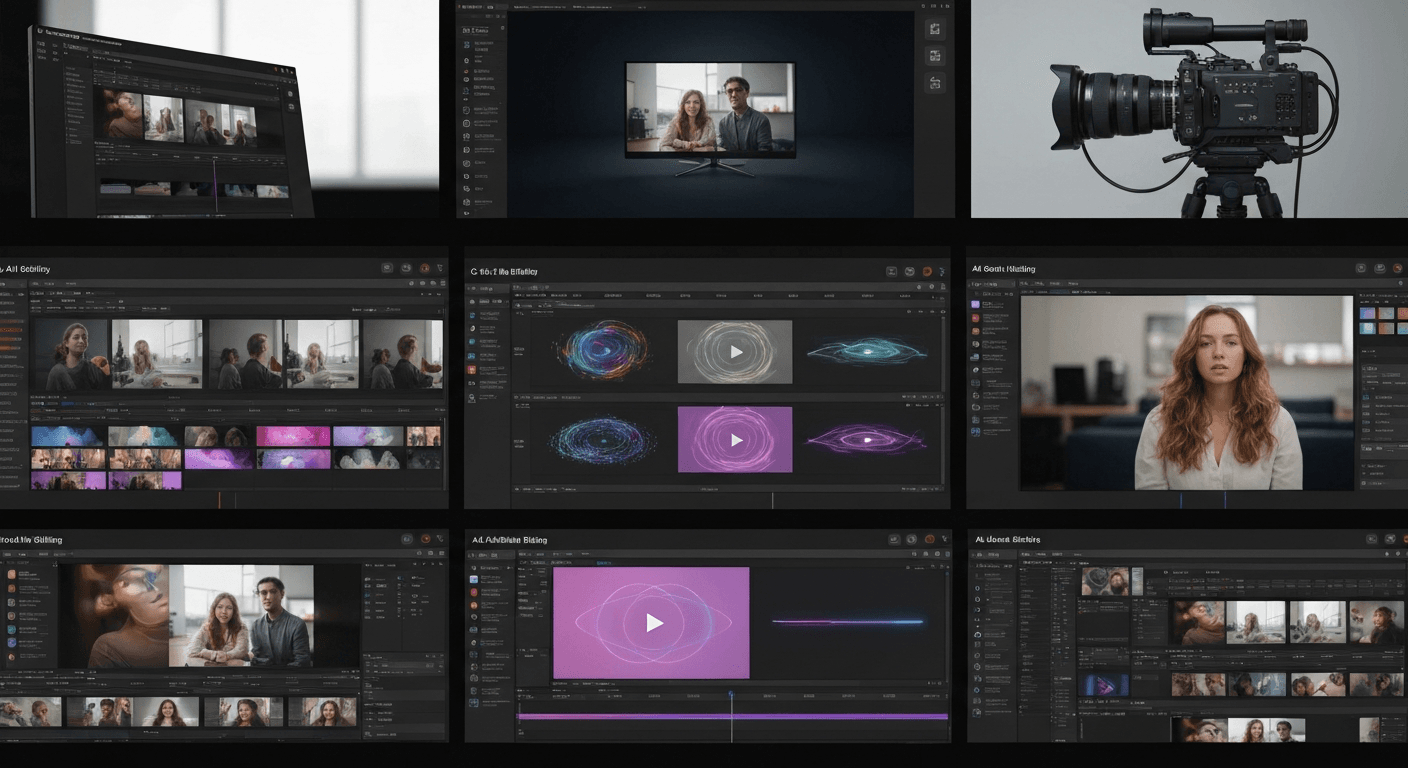 The digital landscape is buzzing with video, and you're likely eager to jump in. But the thought of mastering complex editing software might feel daunting, holding back your creative vision. What if you could produce professional-quality videos with unprecedented ease? Enter the world of AI video editors, a game-changer democratizing content creation for everyone. With the sheer volume of these tools emerging, pinpointing the best AI editor video for your unique projects is crucial. This guide is designed to cut through the noise, equipping you with the knowledge to make the perfect choice. We'll delve into understanding the core AI features that matter, how to assess user-friendliness, and what the future holds, so you can confidently select a tool that will truly elevate your video content.
Understanding the AI Video Editor Landscape
The realm of video creation is undergoing a dramatic transformation, largely driven by the advent of AI video editors. These tools are moving beyond the traditional, time-consuming timelines of conventional editing software, offering a more intuitive and efficient approach to crafting compelling video content. For creators seeking the best ai editor video experience, understanding these capabilities is paramount.
What Exactly is an AI Video Editor?
An AI video editor, at its core, is a software solution that leverages artificial intelligence to automate and enhance various aspects of the video editing process. Instead of meticulously cutting, splicing, and arranging clips manually, users can often interact with these tools through simple commands or prompts. This paradigm shift redefines what video editing entails, making professional-quality output more accessible.
Why AI is Revolutionizing Video Editing
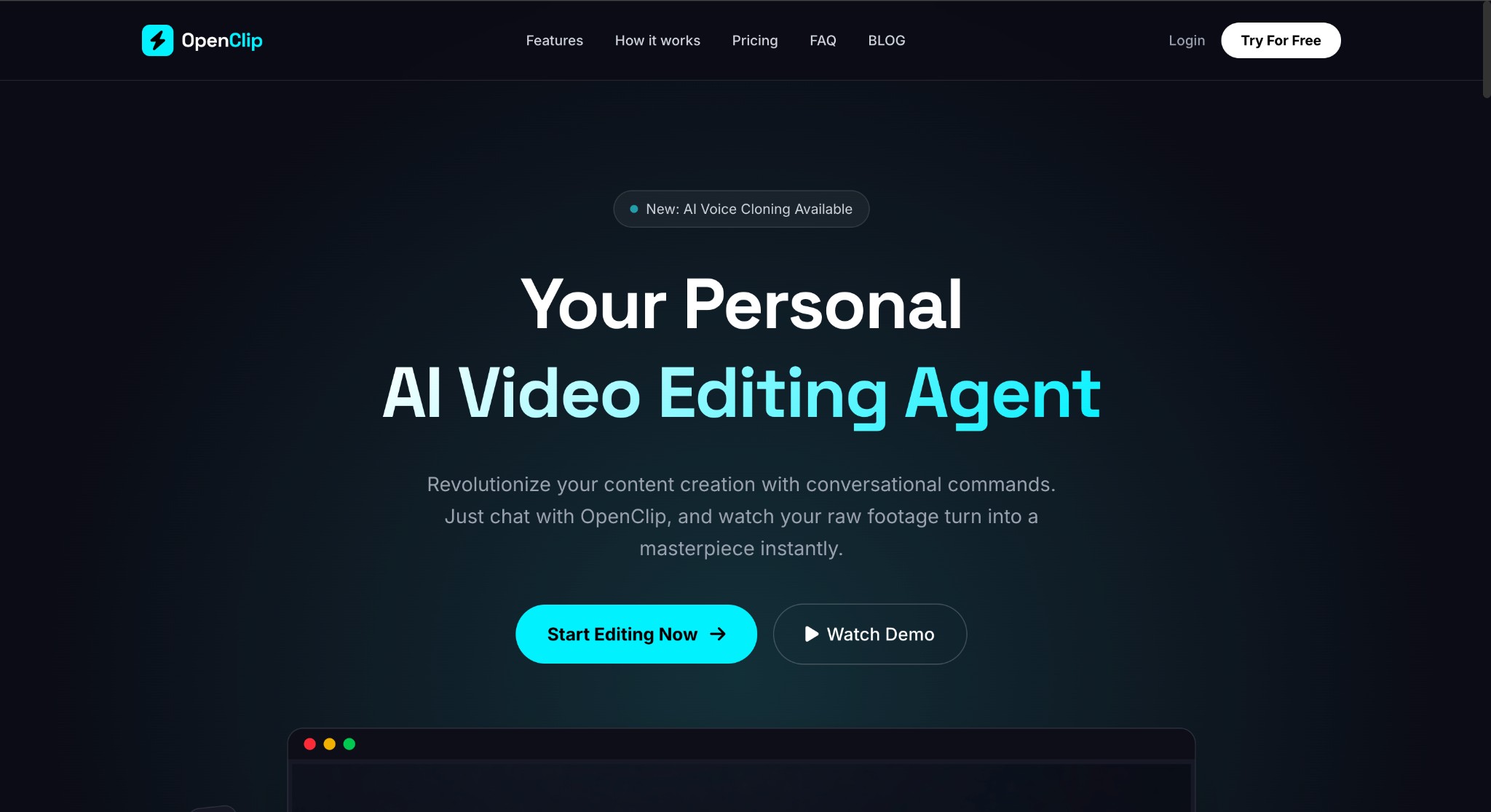
The benefits of AI in video creation are profound, primarily centering on speed, efficiency, and accessibility. Tools like OpenClip act as personal AI video editing agents, capable of transforming raw footage into polished videos with minimal user input. This means creators can achieve more in less time, freeing them up to focus on content strategy and audience engagement. The ability to automatically remove silence, add captions, integrate background music, and apply smart transitions instantly dramatically lowers the barrier to entry for aspiring YouTubers, vloggers, and modern content creators.
Key Features to Look For in an AI Video Editor
When evaluating the best AI editor video options, core functionalities are crucial. Look for features such as:
The evolving capabilities of AI editing tools mean that features like smart B-roll insertion and AI-generated montages are becoming increasingly common, further pushing the boundaries of what's possible for content creators.
Identifying Your Project Needs: The Foundation of Your Choice
Choosing the best AI editor video for your needs hinges on a clear understanding of your project's demands. This involves assessing the type of content you create, your technical proficiency and available time, your budget, and how the AI editor integrates with your existing workflow.
What Kind of Videos Are You Creating?
The capabilities of an AI video editor should align with your content. For instance, if you're producing vlogs or social media clips, features like automatic silence removal, caption generation, and quick smart transitions, as offered by tools like OpenClip, are invaluable. For more professional presentations or tutorials, you might need more granular control over editing and advanced AI-driven effects.
What's Your Skill Level and Time Commitment?
Your comfort with technology and the learning curve associated with a new tool are crucial. If you're new to video editing or have limited time, a user-friendly, conversational interface like OpenClip's "personal AI video editing agent" that transforms raw footage via chat commands, is ideal. Conversely, experienced editors might seek AI tools that offer more advanced customization options.
Budget Considerations for AI Video Editors
The market offers a spectrum from free AI video editors to premium subscriptions. Free options, like Invideo AI, can be great for trying out AI editing, but often come with limitations on features or export quality. Paid solutions, such as those offering advanced AI assistance and multi-round revisions without editing skills, typically provide a higher value proposition for serious content creators.
Technical Requirements and Integrations
Consider how the AI editor fits into your existing setup. Compatibility with your operating system and other software is vital. Tools that offer seamless integration, like OpenClip's ability to instantly insert background music and smart transitions, streamline your workflow and ensure efficiency.
Deep Dive into AI Video Editor Capabilities: What Matters Most
The quest for the best AI editor video often boils down to understanding how these powerful tools can simplify and enhance the creative process. Modern AI video editors are moving beyond basic automation, offering intuitive control and sophisticated enhancements that empower creators of all skill levels. Tools like OpenClip exemplify this evolution, transforming raw footage into polished content with remarkable ease.
Conversational Editing: The Power of Natural Language
The most groundbreaking advancement in AI video editing is the advent of conversational interfaces. Instead of navigating complex timelines and menus, users can now interact with their video editor using simple chat commands. This means you can tell your AI video agent, such as OpenClip, exactly what you want – for instance, "remove all silence," or "find the most engaging moments." This natural language approach democratizes video editing, making advanced techniques accessible without requiring extensive technical knowledge.
Automated Content Transformation: From Raw Footage to Polished Video
AI excels at handling the tedious aspects of video production. Tools like OpenClip can automatically process raw footage, intelligently removing dead air and silences to create a more dynamic viewing experience. Furthermore, AI can analyze your clips to identify key moments, automatically assembling them into a coherent narrative. This capability is invaluable for busy YouTubers and vloggers who need to produce content efficiently, transforming hours of footage into a presentable video with minimal manual effort.
Smart Enhancements: Captions, Music, and Transitions
Beyond basic assembly, AI editors offer intelligent enhancements that elevate video quality. Accurate, AI-generated captions are now standard, improving accessibility and viewer engagement. AI can also suggest and instantly insert appropriate background music that syncs with the video's pacing and mood. Similarly, smart transitions are automatically applied, ensuring a professional flow between clips. OpenClip, for example, specializes in these automated enhancements, making it a powerful tool for content creators aiming for a professional look.
Revision and Iteration: The Flexibility of AI-Assisted Workflows
The iterative nature of content creation is significantly streamlined by AI. With AI-assisted workflows, making revisions is no longer a daunting task. You can request multi-round modifications through simple commands, such as adding B-roll footage or even cloning a voice for narration, without needing to be an editing expert. This flexibility, as demonstrated by OpenClip's capabilities, allows creators to refine their videos quickly and efficiently, ensuring the final product perfectly matches their vision.
Evaluating User Experience and Practical Application
When assessing the best AI editor video solutions, user experience and practical application are paramount. The intuitive nature of an AI video editor can significantly impact productivity, transforming complex tasks into straightforward processes.
Ease of Use and Learning Curve
For both beginners and seasoned content creators, an intuitive interface is crucial. Tools like OpenClip are designed with a remarkably low learning curve. Users can leverage simple chat commands to achieve professional-grade video edits, eliminating the need for extensive technical knowledge. This conversational approach to editing ensures that the focus remains on creative storytelling, not on mastering complicated software.
The Importance of a User-Friendly Interface
A clean and organized workspace directly correlates with enhanced productivity. OpenClip's design prioritizes a streamlined workflow, allowing users to effortlessly navigate features such as automatic silence removal, caption generation, and the insertion of background music and smart transitions. This user-friendly interface empowers creators to produce content more efficiently.
Real-World Examples: Who Benefits Most from AI Video Editors?
YouTubers, vloggers, and modern content creators are the primary beneficiaries of advanced AI video editors. Tools like OpenClip act as a personal AI video editing agent, simplifying the entire creation process. For instance, a YouTuber can transform raw footage into engaging content for their channel by simply describing their desired edits. This is particularly valuable for those who need to produce a consistent stream of dynamic vlogs or efficient social media content without extensive post-production time. The ability to perform multi-round revisions without any editing skills further democratizes video creation, making professional results accessible to everyone.
Considering the 'AI Agent' Concept for Content Creation
The "AI agent" concept in content creation signifies a shift towards highly personalized and automated assistance. Practical implications include significantly reduced production times, allowing creators to focus more on strategy and less on manual tasks. For instance, an AI agent can proactively suggest edits, identify trending topics within your footage, or even draft initial video scripts based on your raw content.
Actionable Tips:
1. Define your AI agent's role: Clearly articulate what tasks you want your AI video editor to handle. Do you need it to primarily focus on speed and efficiency, or do you require more creative input and suggestions?
2. Experiment with conversational prompts: Practice using natural language to communicate your editing needs. The more precise your prompts, the better the AI agent will understand and execute your vision.
Beyond the Features: Security, Reliability, and the Future
As AI video editing tools mature, the focus shifts from mere functionality to the critical aspects of user trust and future potential. The best AI editor video solutions must now address security, ensure consistent performance, and offer a glimpse into what's next for content creation.
Security and Privacy in AI Video Editing
A primary concern when uploading footage to any AI platform is data security and privacy. Users need assurance that their raw footage is protected and not misused. Robust encryption, clear data retention policies, and transparent privacy agreements are paramount. While specific details for every platform vary, understanding how your data is handled is crucial before committing your valuable content.
Reliability and Performance of AI Tools
The stability and consistency of AI editing outputs directly impact the user experience. A tool that can reliably remove silences, generate accurate captions, and apply smart transitions without errors is essential. For creators relying on tools like OpenClip, which promises multi-round revisions without editing skills, the consistency of its AI agent in transforming chat commands into professional videos is key to its value proposition. The ability to achieve professional-grade results repeatedly, from YouTubers to vloggers, hinges on this reliability.
The Future of AI in Video Content Creation
The trajectory of AI in video editing points towards more sophisticated storytelling and increasingly automated workflows. We can anticipate AI agents capable of suggesting narrative arcs, intelligently sourcing B-roll, and even mastering complex editing techniques like AI-generated montages. The competitive landscape is driving continuous innovation, with new AI video editors emerging frequently, each pushing the boundaries of what's possible for content creators.
Where to Find and Test AI Video Editors
Discovering and testing the best AI editor video solutions is straightforward. Many platforms offer free trials, allowing users to experience features like conversational editing and AI-powered captioning firsthand. Exploring options like Invideo AI, known for its "first-of-its-kind" approach and free tier, alongside other emerging tools, is recommended. Evaluating their performance, ease of use, and the quality of AI-generated outputs will help identify the ideal tool for your specific content creation needs.
FAQ (Frequently Asked Questions)
Q1: What are the primary benefits of using an AI video editor compared to traditional software?
A1: AI video editors offer significant advantages in terms of speed, efficiency, and accessibility. They automate time-consuming tasks like silence removal, captioning, and smart transitions, drastically reducing editing time. This allows creators to focus more on content strategy and less on technical editing, making professional-quality video production accessible to a wider audience.
Q2: Can AI video editors replace the need for human creativity and editing skills entirely?
A2: While AI video editors automate many technical aspects, they are best viewed as powerful assistants. Human creativity is still essential for conceptualizing the video, guiding the AI with prompts, and making final creative decisions. AI handles the laborious tasks, freeing up creators to be more strategic and artistic.
Q3: Are there free AI video editors available, and what are their limitations?
A3: Yes, several AI video editors offer free tiers or trials, such as Invideo AI. These are excellent for beginners or for testing the technology. However, free versions often come with limitations on features, export quality, watermarks, or usage caps. For more advanced features and professional output, paid subscriptions are typically required.
Q4: How does conversational editing work in AI video editors?
A4: Conversational editing allows users to interact with the AI editor using natural language commands, similar to chatting with a person. Instead of navigating complex menus, you can simply type instructions like "remove all background noise" or "add a catchy intro." The AI then interprets these commands and performs the requested edits, making the process highly intuitive.
Conclusion
In conclusion, navigating the landscape of AI video editing to find the best AI editor video has evolved beyond simply tallying features. It's now a strategic decision centered on aligning a tool's capabilities with your unique project requirements, existing skill set, and overarching creative aspirations. By grasping the fundamental power of AI in video editing – from intuitive conversational commands that simplify complex tasks to automated enhancements that polish your visuals – you're equipped to make an informed choice. Remember to weigh practical considerations like user-friendliness and data security, as these play a crucial role in a seamless and productive workflow. The journey to discovering the best AI editor video is an investment in streamlining your creative process and ultimately, in elevating your content to new heights. As artificial intelligence continues its rapid progression, the horizons for video creation are expanding exponentially. This makes the present moment an unparalleled opportunity to embrace these transformative tools and fully unleash your creative potential. Don't hesitate to explore different options, experiment with their functionalities, and ultimately, identify the AI video editor that will become your indispensable partner in crafting compelling and impactful video content. Start your exploration today and discover the perfect AI video editor to bring your vision to life!