
Discover Top AI Video Tools for Seamless Content Creation in 2026
 In the dynamic digital arena of 2026, video content isn't just king – it's the entire kingdom. Whether you're aiming to captivate audiences with snappy social media clips, educate with detailed YouTube tutorials, or connect through personal vlogs, the hunger for polished video has never been more voracious. Yet, the traditional path of video editing often feels like a steep, time-consuming climb, demanding specialized skills that can sideline even the most passionate creators. But what if you could bypass those hurdles? Welcome to the age of Artificial Intelligence, where the future of video creation is already here. AI video tools are revolutionizing how you transform raw footage into professional-grade content with astonishing speed and simplicity. This guide is your gateway to discovering the top AI video tools available right now, designed to supercharge your workflow, unleash your creativity, and make seamless content creation your new reality.
The Dawn of AI-Powered Video Creation: Why 2026 is Your Year
The content creation landscape is undergoing a seismic shift, with video emerging as the undisputed king of engagement. Modern creators face escalating demands for dynamic, polished video content, often outpacing the capabilities of traditional editing software. This is where AI steps in, democratizing video production and making it remarkably accessible and efficient. As we look towards 2026, the integration of sophisticated AI video tools is set to redefine creative workflows, empowering creators of all skill levels. This burgeoning field is rapidly evolving, with platforms like DomoAI, RecCloud, and emerging technologies from industry leaders like Runway, Google Veo 2, and OpenAI Sora poised to become essential components of any creator's toolkit. Understanding these advancements is key to leveraging the power of the top AI video tools available.
The Evolving Content Creation Landscape and Video's Dominance
Content creators are increasingly reliant on video to capture audience attention. The demand for high-quality, engaging video experiences is at an all-time high across platforms like YouTube and TikTok. This necessitates efficient and effective production methods that can keep pace with the rapid content cycle.
Limitations of Traditional Video Editing
Traditional video editing demands significant time, technical expertise, and often expensive software. For many YouTubers and vloggers, the learning curve and time commitment involved in mastering complex editing suites can be a major bottleneck, hindering their ability to consistently produce content.
AI Revolutionizing Video Production
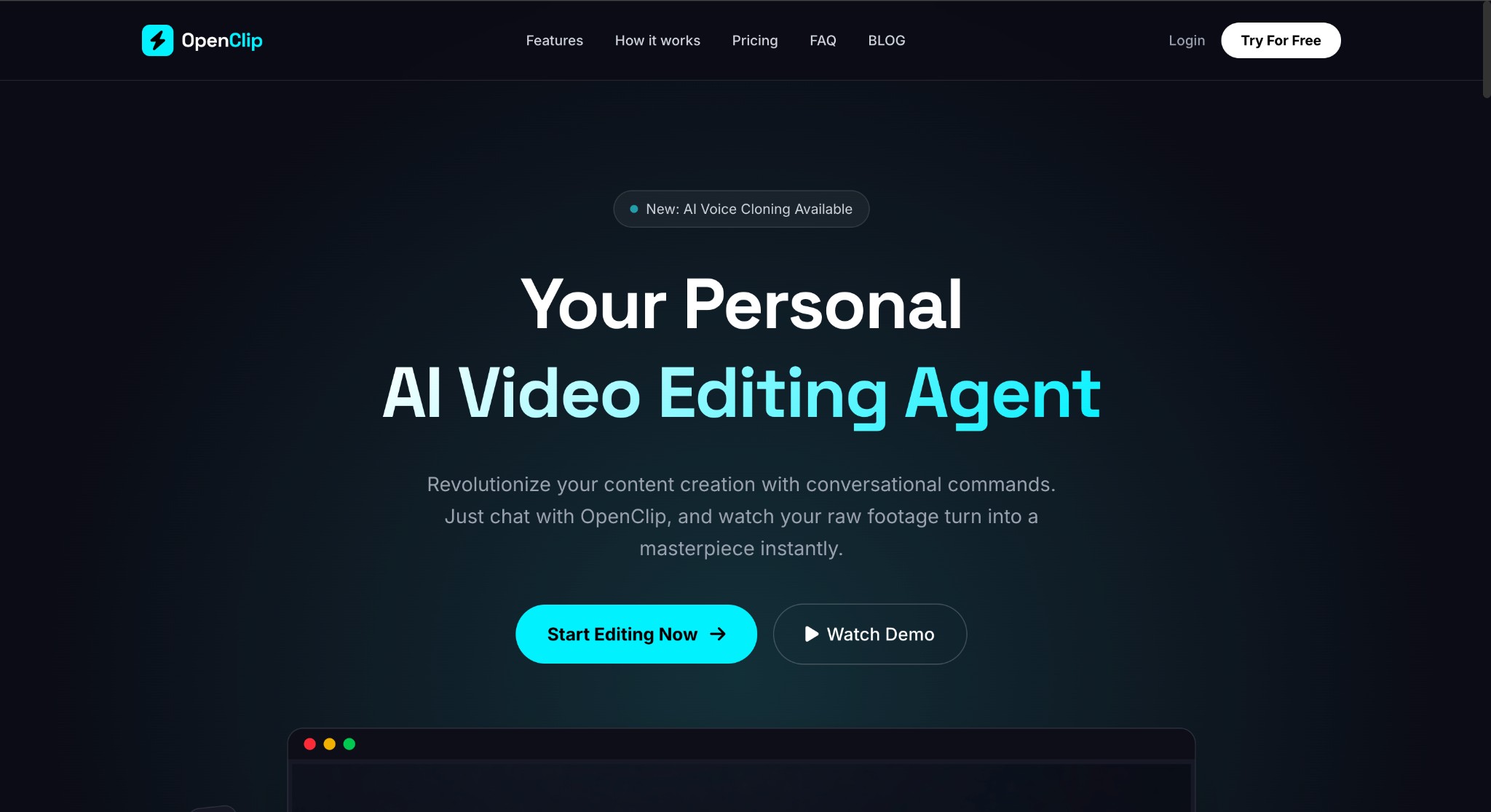
AI is fundamentally transforming video creation by automating complex tasks and offering intuitive interfaces. Tools like OpenClip, described as a personal AI video editing agent, exemplify this shift. Through simple chat commands, raw footage can be transformed into professional videos, with automatic silence removal, caption generation, background music insertion, and smart transitions. This conversational approach, coupled with multi-round revision capabilities without requiring editing skills, makes professional video production accessible to everyone. The emergence of powerful AI video generators, such as those recently reviewed and highlighted by tech publications, signals a new era for content creation efficiency.
Setting the Stage for Top AI Video Tools
The rapid advancements in AI video generation, with platforms like Kling AI (2.0), Runway (Gen 4), Google Veo 2, OpenAI Sora, and Pika 2.2 pushing the boundaries, indicate that 2026 will be a pivotal year for creators. These tools are not just about speed; they offer enhanced creative possibilities, making the pursuit of compelling visual narratives more achievable than ever. Exploring the top AI video tools available will be crucial for any creator aiming to thrive in the evolving digital space.
Understanding the AI Video Tool Spectrum
The landscape of AI-powered video tools is rapidly expanding, offering creators diverse solutions. Navigating this spectrum requires understanding the core functionalities and identifying features that align with your specific needs. This section will differentiate between tools that generate video from scratch and those that enhance existing footage, highlighting key features that define the top AI video tools available today.
AI Video Generators vs. AI Video Editors
At one end of the spectrum are AI video generators, which create video content from text prompts, images, or existing data. Platforms like Kling AI (2.0), Runway (Gen 4), Google Veo 2, OpenAI Sora, and Pika 2.2 fall into this category, transforming abstract ideas into visual narratives. Conversely, AI video editors, such as Wisecut, focus on refining and optimizing pre-existing video footage. Wisecut, for example, intelligently sifts through raw clips to extract key moments, transforming them into engaging social media content. OpenClip also exemplifies this category, acting as an AI video editing agent that converts raw footage into professional videos through simple chat commands.
Key Features to Look For in AI Video Tools
When evaluating the top AI video tools, several key functionalities stand out. Automation and smart editing are paramount, streamlining complex tasks. Content enhancement, including features like automatic captioning and silence removal, significantly boosts production efficiency. The role of Natural Language Processing (NLP) is crucial for intuitive control; tools like OpenClip leverage this to allow users to edit via simple chat commands. Essential features to consider include:
| Feature | AI Video Generators | AI Video Editors |
|---|---|---|
| Primary Goal | Create new video content from prompts/data. | Refine and optimize existing video footage. |
| Input | Text, images, concepts. | Raw video clips, footage. |
| Examples | Kling AI, Runway, Sora, Pika, Google Veo. | Wisecut, OpenClip. |
| Key Benefit | Rapid ideation and content creation. | Efficient editing and polished final output. |
| NLP Role | Prompt interpretation for generation. | Conversational editing commands for refinement. |
By understanding this spectrum and prioritizing these features, creators can effectively leverage the power of AI to elevate their video production workflows.
Top AI Video Tools Redefining Content Creation in 2026
The landscape of content creation is being rapidly reshaped by advancements in artificial intelligence, with a new wave of top AI video tools emerging in 2026. These platforms are democratizing video production, making sophisticated editing and generation accessible to a wider audience. From intuitive conversational agents to powerful content generators, these tools are empowering creators to produce professional-grade videos with unprecedented ease and efficiency.
OpenClip: Your Conversational Video Editing Agent
OpenClip stands out as a revolutionary personal AI video editing agent, fundamentally changing how raw footage is transformed into polished content. Its core value proposition lies in its incredibly user-friendly, chat-command interface. Instead of navigating complex timelines and menus, creators can simply describe their desired edits in natural language. This includes automatically removing silences for tighter pacing, generating accurate captions, inserting fitting background music, and applying smart transitions that enhance visual flow. A key feature is its multi-round revision capability, allowing users to refine their videos iteratively without needing any prior editing skills. This makes OpenClip an ideal solution for YouTubers, vloggers, and any content creator looking to streamline their workflow and produce engaging videos quickly and efficiently, even with zero editing experience.
Emerging Leaders in AI Video Generation
Beyond editing, the realm of AI video generation is seeing significant innovation. Platforms like DomoAI are emerging as comprehensive powerhouses, offering robust capabilities for creating video content from scratch or based on specific prompts. Similarly, Kling AI is pushing the boundaries of generative video, enabling creators to bring imaginative concepts to life through AI. These tools excel at producing entirely new visual narratives, offering a glimpse into the future of automated visual storytelling.
AI-Powered Editing Suites for Enhanced Workflows
Complementing generative tools are AI-powered editing suites designed to streamline existing workflows. Solutions such as RecCloud and Wisecut are making waves by intelligently enhancing footage and extracting key moments. RecCloud, for instance, can automate tedious editing tasks, while Wisecut specializes in identifying and isolating compelling segments from longer recordings, perfect for creating shareable social media clips. These platforms focus on efficiency, allowing creators to spend less time on manual editing and more time on conceptualizing and refining their content strategy.
The evolution of these top AI video tools signifies a paradigm shift in content creation. By offering intuitive interfaces, advanced generation capabilities, and workflow optimization, they are not only lowering the barrier to entry but also elevating the quality and speed at which creators can produce compelling video content.
Beyond the Basics: Advanced AI Capabilities for Professional Results
Moving beyond simple editing, the latest advancements in AI are transforming raw footage into polished, professional videos with remarkable efficiency. For content creators seeking to elevate their output, understanding these sophisticated AI capabilities is crucial. Tools like OpenClip are at the forefront, automating complex tasks and enabling users to achieve studio-quality results without extensive technical expertise. This section explores how these cutting-edge features contribute to creating compelling video content.
Smart Transitions and B-Roll Insertion
AI tools, exemplified by OpenClip, are revolutionizing the editing process by automating intricate tasks. OpenClip acts as a personal AI video editing agent, capable of transforming raw footage into professional videos through simple chat commands. It intelligently identifies opportunities to insert smart transitions that enhance flow and viewer engagement. Furthermore, it can automatically suggest and insert relevant B-roll footage, a task that traditionally requires significant time and creative input, ensuring your narrative is visually rich and dynamic.
AI-Powered Captioning and Transcription Accuracy
The significance of accurate and efficient AI-generated captions cannot be overstated. They are vital for accessibility, ensuring content reaches a wider audience, including those with hearing impairments or those watching in sound-off environments. Tools now offer highly precise transcription services, often integrated seamlessly. This not only improves viewer engagement but also enhances SEO by making video content searchable.
Automated Music Synchronization and Sound Design
AI's role in audio production is equally transformative. Automated music synchronization ensures background tracks align perfectly with the video's pacing and mood, creating a more immersive viewing experience. Beyond just music, AI can enhance overall sound design by intelligently balancing audio levels, removing unwanted noise, and even adding subtle sound effects, contributing to a professional audio landscape.
Voice Cloning and Natural Language Video Editing
Pushing the boundaries further, cutting-edge features like AI voice cloning are emerging, allowing for seamless audio replacement or addition. OpenClip exemplifies the power of natural language video editing, enabling users to direct complex edits through conversational commands. This "chat with your video" approach democratizes advanced editing, making sophisticated techniques like multi-round revisions accessible to anyone, regardless of their prior editing skills, positioning them as truly top AI video tools.
Choosing the Right AI Video Tool for Your Needs
Selecting the ideal AI video tool hinges on aligning its capabilities with your specific content objectives and audience. As the landscape of top AI video tools expands, discerning the best fit becomes crucial for efficient and impactful content creation.
Assessing Your Content Goals and Target Audience
Consider your primary content goals. Are you aiming for short, attention-grabbing social media clips, or do you require tools for longer-form YouTube content or vlogs? For instance, tools like OpenClip are designed as AI video editing agents that transform raw footage into professional videos through simple chat commands, ideal for YouTubers and vloggers needing automated silence removal, captioning, background music, and smart transitions for multi-round revisions without extensive editing skills. This conversational approach significantly streamlines content creation for various platforms.
Ease of Use and Learning Curve
The user interface and required learning investment vary greatly among AI video tools. While some offer intuitive chat-based commands, others might have more complex graphical interfaces. OpenClip's strength lies in its zero-editing-skill requirement, making it accessible for beginners. Evaluating the learning curve ensures you can quickly leverage the tool's full potential.
Integration with Existing Workflows and Platforms
Consider how well a chosen AI video tool integrates with your current software and platforms. Seamless integration minimizes friction and maximizes productivity. Tools that offer APIs or common export formats can easily fit into established content pipelines, enhancing overall efficiency.
Cost-Effectiveness and Scalability
Analyze pricing models to ensure they align with your budget and future growth plans. Many top AI video tools offer tiered subscriptions based on features, usage, or export quality. Scalability is key; ensure the tool can grow with your content demands without becoming prohibitively expensive.
The Future of AI in Video Creation: Trends and Innovations
The landscape of video creation is rapidly evolving, driven by advancements in AI. Tools like OpenClip are at the forefront, transforming how content is produced. This evolution promises greater efficiency and accessibility, making sophisticated video editing achievable for everyone.
The Rise of Conversational AI in Editing
Conversational AI interfaces, such as OpenClip's, are set to revolutionize editing. By allowing users to transform raw footage into professional videos through simple chat commands—automatically removing silence, adding captions, background music, and smart transitions—these tools empower creators. This multi-round revision capability, without requiring editing skills, positions them as indispensable for YouTubers, vloggers, and modern content creators seeking to leverage top AI video tools.
Ethical Considerations and Responsible AI Use
As AI-generated content becomes more sophisticated, addressing ethical concerns is paramount. Issues like deepfakes and data privacy require robust solutions. Responsible AI use will focus on transparency and consent, ensuring that these powerful tools are employed ethically.
AI's Impact on Video Accessibility and Inclusivity
AI tools are democratizing video creation. They are making it significantly more accessible for individuals with disabilities and diverse backgrounds by automating complex tasks. Looking ahead, innovations like more sophisticated animation and realistic rendering will further broaden the creative possibilities for all.
FAQ (Frequently Asked Questions)
Q1: What are the primary benefits of using AI video tools for content creation in 2026?
A1: AI video tools offer significant benefits, including drastically reduced editing time, lower barriers to entry for aspiring creators, automated complex tasks like captioning and silence removal, enhanced creative possibilities through AI generation, and the ability to produce professional-quality content with greater efficiency and accessibility.
Q2: Can AI video tools truly replace traditional video editing software for professionals?
A2: While AI tools are rapidly advancing and can handle many tasks previously exclusive to professional software, they are more likely to augment rather than completely replace traditional workflows for high-end professionals. For many YouTubers, vloggers, and social media creators, AI tools offer a more efficient and accessible solution for everyday content production.
Q3: How does conversational AI, like in OpenClip, change the video editing process?
A3: Conversational AI transforms video editing by allowing users to make edits through simple text commands in natural language, rather than navigating complex timelines. This means tasks like cutting out silences, adding captions, or adjusting music can be done by simply "talking" to the software, making advanced editing accessible to users with no prior editing experience.
Q4: What are the key differences between AI video generators and AI video editors?
A4: AI video generators create entirely new video content from text prompts, images, or concepts, such as Kling AI or Sora. AI video editors, on the other hand, focus on refining and optimizing existing video footage, automating tasks like cutting, captioning, and adding effects, with examples like OpenClip and Wisecut.
Q5: Are AI video tools suitable for beginners with no prior editing experience?
A5: Yes, many AI video tools are specifically designed with beginners in mind. Tools like OpenClip, with their conversational interfaces and automated features, allow users to create professional-looking videos without needing any technical editing skills, making them highly accessible for newcomers to video creation.
Conclusion
The landscape of content creation is being dramatically reshaped by the advent of top AI video tools, and the journey into this innovative realm is brimming with exciting potential for creators of all backgrounds. As we've explored, technologies like OpenClip are spearheading this revolution, showcasing how intuitive, conversational interfaces are making sophisticated video editing accessible to everyone. The rapid evolution of AI promises even more powerful features and streamlined workflows, empowering you to translate your creative visions into reality with unprecedented ease.
To truly harness this transformative power, it's crucial to actively explore and experiment with these cutting-edge top AI video tools. Don't be afraid to dive in, test their capabilities, and discover which ones best align with your unique creative objectives. By understanding their strengths and integrating them strategically into your production process, you'll be perfectly positioned to craft compelling video content that not only captivates your audience but also significantly elevates your online presence throughout 2026 and into the future. Start experimenting with these groundbreaking AI video tools today and unlock your full creative potential!