
What's the Best Video AI Editor for Your YouTube Journey in 2026?
 The year is 2026, and the YouTube landscape is a dazzling, hyper-competitive arena where captivating content reigns supreme. Are you ready to elevate your channel and stand out from the crowd? For both seasoned creators and ambitious newcomers, crafting polished, engaging videos is no longer a luxury, but a necessity. Yet, the steep learning curves and time demands of traditional video editing can feel like insurmountable obstacles.
This is where the groundbreaking video AI editor steps in, poised to revolutionize your creative process. These intelligent tools are democratizing video production, freeing you from tedious tasks and allowing you to concentrate on what truly matters: your message and your audience. In this comprehensive guide, we'll explore the leading video AI editors that will empower your YouTube journey in 2026, with a special spotlight on how conversational AI is reshaping the future of content creation. Get ready to unlock your channel's full potential.
The Evolving Landscape of YouTube Content Creation
YouTube's reign as the premier video platform continues, but with its dominance comes rising viewer expectations. Creating engaging content is no longer just about the idea; it demands a professional polish that can be a significant hurdle for aspiring creators. This is where the emergence of advanced tools is reshaping the creative process.
The Growing Demand for High-Quality Video
Viewers now expect slick production values, clear audio, and dynamic visuals. This increasing demand places a premium on well-edited videos, pushing creators to invest more time and resources into post-production. The technical complexities of traditional editing software often present time constraints and steep learning curves, acting as barriers for many talented individuals.
Challenges Faced by Aspiring YouTubers
The path to YouTube success is paved with challenges. Beyond developing compelling content ideas, creators grapple with the technical demands of video editing. Mastering complex software, managing large files, and dedicating hours to meticulous editing can be overwhelming, especially for those juggling multiple responsibilities.
The Dawn of AI-Powered Video Editing
The landscape is rapidly shifting with the advent of AI-powered solutions. Tools like InVideo AI are democratizing video production by transforming raw footage into polished content through simple text commands. This technology allows users to edit video style, swap media, or change scenes with unprecedented ease, eliminating the need for extensive editing expertise. This shift from manual, time-consuming editing to intelligent, assisted workflows is empowering a new generation of YouTubers, vloggers, and content creators to produce professional-quality videos efficiently.
Understanding the Power of a Video AI Editor
The landscape of content creation is rapidly evolving, and at its forefront is the emergence of sophisticated AI-powered tools. A video AI editor represents a significant leap forward, transforming how individuals and businesses approach video production. These intelligent platforms leverage artificial intelligence to automate complex tasks, streamline workflows, and democratize access to professional-quality video editing.
What Exactly is a Video AI Editor?
At its core, a video AI editor is a software application that utilizes artificial intelligence and machine learning algorithms to assist in the video creation and editing process. Unlike traditional editors that rely solely on manual manipulation, AI editors can intelligently interpret footage and user commands to perform a wide range of functions. This technology aims to significantly reduce the time and technical expertise required to produce polished video content, making it accessible to a broader audience, from novice vloggers to seasoned marketing professionals.
Core AI Capabilities: Beyond Basic Cuts
The power of a video AI editor extends far beyond simple cutting and trimming. These tools excel at automating repetitive tasks, such as removing silence from dialogue or trimming unnecessary pauses, ensuring a more engaging viewing experience. Intelligent features are a hallmark, with capabilities like auto-captioning that instantly transcribe speech, making content more accessible and searchable. Furthermore, AI can intelligently integrate background music, syncing it with the video's pacing, and apply smart transitions that enhance visual flow.
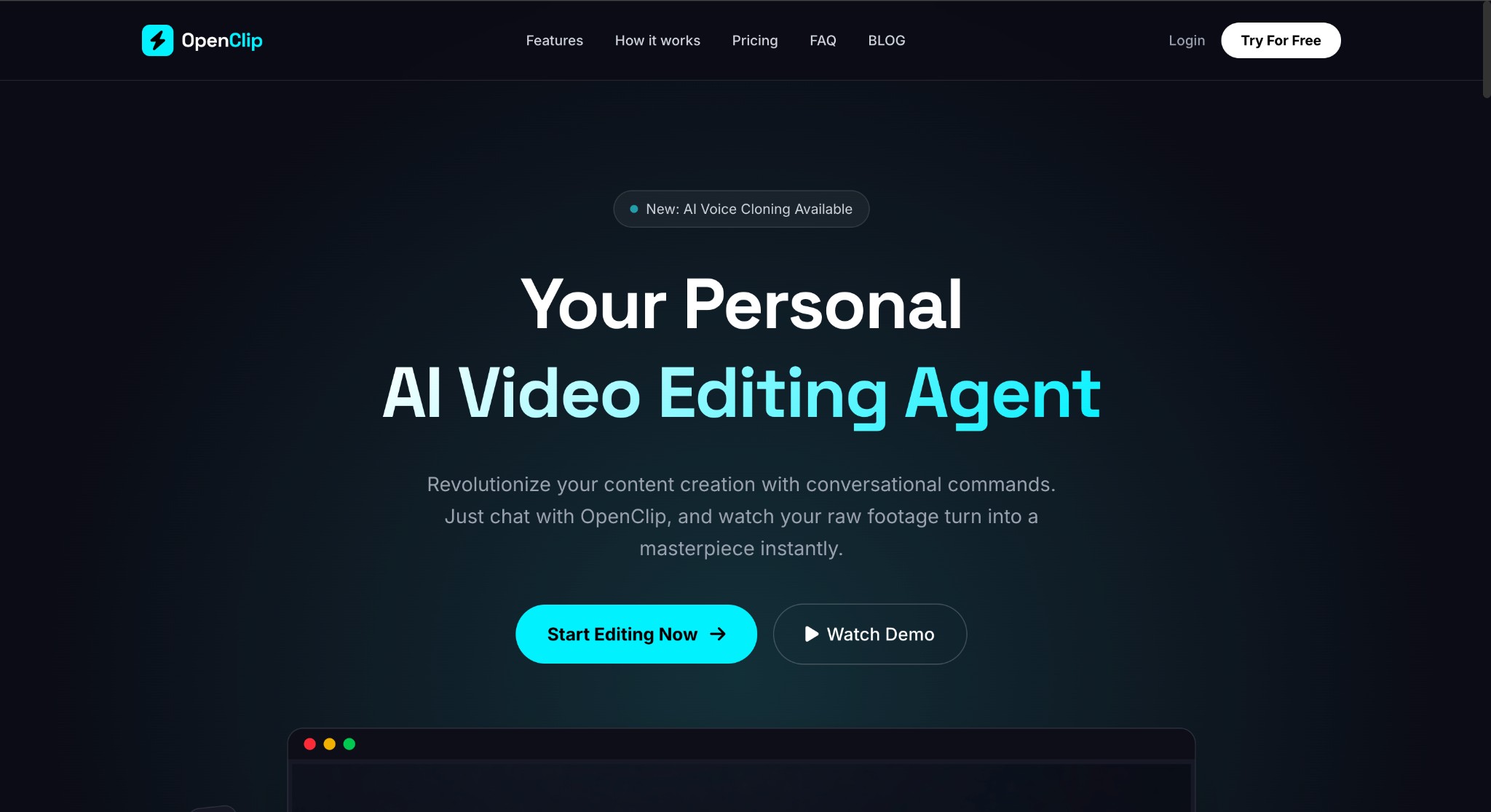
The concept of an "AI video editing agent," exemplified by platforms like OpenClip, is a key development. These agents allow users to interact with the editing process through natural language. Imagine transforming raw footage into professional videos simply by typing or speaking commands, akin to having a dedicated editing assistant. This natural language processing enables intuitive control, allowing users to request specific edits like "add upbeat music" or "cut out that speaking segment." This conversational approach empowers users with multi-round revision capabilities without needing editing expertise, making complex adjustments accessible to everyone. AI can also intelligently insert B-roll footage or create dynamic AI-driven montage sequences, elevating the production value of any project.
Key Features to Look For in 2026
As video AI editors continue to advance, several key features will become essential for creators by 2026. Expect enhanced conversational editing capabilities, where AI can understand more nuanced requests and even suggest creative improvements. Greater autonomy in AI-driven montage creation will allow for the generation of highlight reels or social media clips with minimal input. Improved AI background music synchronization will offer more sophisticated mood and tempo matching. Furthermore, the ability for AI to perform multi-round video revisions based on feedback, without requiring users to learn complex editing software, will be paramount. Tools that offer zero-learning-curve video editing through intuitive chat interfaces will continue to dominate, catering to the growing demand for efficient content creation.
| Feature | OpenClip (Example Agent) | Traditional Editor |
|---|---|---|
| Automation of Repetitive Tasks | High | Manual |
| Natural Language Control | Yes | No |
| Auto-Captioning | Yes | Manual/Plugin |
| AI-Driven Montage | Yes | Manual |
| Multi-Round Revisions | Effortless | Requires Expertise |
Spotlight on Leading Video AI Editors for YouTubers
The landscape of content creation is rapidly evolving, and for YouTubers, efficiency and quality are paramount. Artificial intelligence is stepping in to revolutionize video editing, transforming what was once a time-consuming and skill-intensive process into an accessible and intuitive experience. This section delves into leading video AI editors that are empowering creators to produce professional-grade content with unprecedented ease.
OpenClip: Your Conversational Video Editing Partner
OpenClip positions itself as a personal AI video editing agent, fundamentally changing how raw footage is transformed into polished videos. Its core value proposition lies in its conversational interface, allowing users to edit videos through simple chat commands. This approach eliminates the need for complex timelines and technical jargon. OpenClip's standout features include automatic silence removal, which cleans up pacing and engagement, and auto-generated captions, crucial for accessibility and SEO. Furthermore, it offers instant background music integration and smart transitions, streamlining the post-production workflow. OpenClip aims to be the ultimate content creation tool for YouTubers and vloggers, acting as an AI video editing agent that understands natural language instructions, making multi-round revisions possible without any prior editing skills. This "zero-basis video editing" appeal is a significant draw for those looking to create engaging content rapidly.
Other Notable AI Video Editing Solutions
While OpenClip excels in conversational editing, other AI video editors offer distinct strengths. For instance, InVideo AI provides a text-driven approach to video creation. Users can modify videos by typing commands, enabling them to alter styles, swap media, or rearrange scenes with remarkable ease. This solution focuses on accessibility, removing technical barriers and allowing creators to concentrate on their message rather than the intricacies of editing. These tools collectively emphasize the "no editing skills needed" aspect, making professional-looking videos achievable for a broader audience.
Comparing Features and User Experience
The appeal of these AI video editors lies in their user-friendliness and the significantly reduced learning curve. For creators new to video production, the concept of "zero-basis video editing" is particularly attractive.
| Feature/Tool | OpenClip | InVideo AI |
|---|---|---|
| Editing Method | Conversational Chat Commands | Text-Based Commands |
| Key Features | Auto Silence Removal, Auto Captions, Instant BGM, Smart Transitions | Style Modification, Media Swapping, Scene Rearrangement |
| User Experience | Personal AI Agent, Intuitive | Accessible, Easy to Use |
| Target User | YouTubers, Vloggers, Content Creators | Beginners, Small Businesses, Marketers |
| Learning Curve | Minimal | Low |
Both OpenClip and InVideo AI exemplify the trend towards AI-powered video editing, democratizing content creation. They empower users to focus on storytelling and creativity, with the AI handling the technical heavy lifting, thus boosting content creation efficiency.
Key Considerations for Choosing Your AI Video Editor
Selecting the right AI video editor is crucial for streamlining your content creation process. With various tools available, understanding their core functionalities and how they align with your needs will ensure you make an informed decision. This guide highlights essential factors to consider when choosing a video AI editor, drawing insights from the capabilities of advanced solutions like OpenClip.
Ease of Use and Learning Curve
The intuitiveness of an AI video editor's interface and commands is paramount, especially for creators who prioritize speed and efficiency. Tools like OpenClip are designed with a conversational approach, allowing users to transform raw footage into professional videos through simple chat commands. This eliminates the steep learning curve often associated with traditional editing software, making it accessible even for those with no prior editing experience. The ability to perform multi-round revisions without needing complex editing skills is a significant advantage, empowering YouTubers and vloggers to focus on their message.
Feature Set and Customization Options
Evaluate the breadth of AI features offered. Key functionalities to look for include AI auto-caption generation, AI background music sync, and AI video cutting. While AI can automate many tasks, the importance of flexibility cannot be overstated. Can you still make manual adjustments to refine the AI's output? For instance, while OpenClip excels at automatically removing silence and adding smart transitions, retaining the ability to fine-tune these elements ensures a professional and personalized final product.
Integration with Your Workflow
Consider how well the AI video editor fits into your existing production pipeline. For a YouTuber, this means seamless integration with content planning, recording, and publishing stages. A tool that can handle tasks like smart insertion of B-roll or AI montage creation directly from chat commands, as suggested by OpenClip's capabilities, significantly boosts efficiency.
Pricing Models and Value for Money
Understanding the pricing models is essential for long-term cost-effectiveness. Many AI video editors offer subscription tiers with varying feature sets. Free trial options are invaluable for testing the platform's capabilities before committing. Assess the overall value proposition: does the AI solution save you time and resources that justify the cost?
Security and Privacy of Your Content
Data security and content ownership are critical concerns with any AI tool. Ensure the platform has robust security measures in place to protect your raw footage and finished videos. Reliability and uptime of the AI service are also important to avoid disruptions to your content schedule.
Maximizing Your YouTube Success with AI-Powered Editing
Embracing a video AI editor is no longer a luxury but a necessity for ambitious YouTubers. These intelligent tools streamline the entire post-production process, transforming raw footage into polished content with unprecedented speed and ease.
Boosting Content Velocity and Consistency
AI editors significantly accelerate content turnaround times. Features like automatic silence removal and smart transition insertion, as seen in platforms like OpenClip, mean creators can produce more videos in less time. This capability is crucial for maintaining a consistent upload schedule, a key factor in audience retention and channel growth. The ability to quickly edit out filler words and add engaging visual elements ensures a professional look without demanding extensive manual effort.
Enhancing Viewer Engagement
Beyond speed, AI enhances viewer engagement. Automatically generated captions improve accessibility and watch time by making content digestible for a wider audience. Smart transitions and AI-driven B-roll suggestions can elevate the viewing experience, keeping audiences captivated. Furthermore, the potential for AI to personalize content, perhaps by tailoring intros or outros for different audience segments, opens new avenues for deeper connection and increased watch duration.
Scaling Your YouTube Channel
AI tools are instrumental in scaling a YouTube channel. They democratize professional editing, allowing creators to overcome creative blocks by suggesting edits or assembling initial cuts. As AI technology advances, it promises to handle increasingly complex tasks, such as advanced color grading or sophisticated visual effects, further empowering creators. The future may even see AI voice cloning becoming a standard tool for creators needing consistent narration or character voices.
The Future of AI in Video Creation
The evolution of the video AI editor is rapidly moving towards truly 'smart' platforms. Tools are transitioning from simple automation to intelligent assistants that understand creative intent. This shift promises a future where video creation is more intuitive, efficient, and accessible than ever before, enabling a new generation of content creators to thrive.
FAQ (Frequently Asked Questions)
Q1: How does a video AI editor differ from traditional video editing software?
A1: Traditional video editing software requires manual manipulation of timelines, clips, and effects, demanding significant technical skill and time. A video AI editor uses artificial intelligence to automate many of these processes, allowing users to control edits through natural language commands or intuitive interfaces, drastically reducing the learning curve and editing time.
Q2: Can AI video editors replace human editors entirely?
A2: While AI video editors are incredibly powerful for automation and efficiency, they are best viewed as sophisticated assistants. For highly creative projects requiring nuanced artistic vision, complex storytelling, or unique visual styles, human editors will likely remain essential. However, for many YouTube creators, AI editors can handle the bulk of technical tasks, freeing up human creators for more strategic and creative input.
Q3: What are the main benefits of using a video AI editor for a YouTube channel?
A3: The primary benefits include significantly faster video production times, improved content consistency, enhanced viewer engagement through features like auto-captions, and the ability for creators with limited technical skills to produce professional-looking videos. This allows YouTubers to focus more on content strategy and audience interaction.
Q4: Are AI video editors suitable for beginners with no prior editing experience?
A4: Yes, absolutely. Many AI video editors, especially those with conversational interfaces like OpenClip, are specifically designed for beginners. They aim for a "zero-learning-curve" experience, allowing users to achieve professional results simply by describing their desired edits.
Conclusion
As we navigate the rapidly evolving landscape of online content, the message is clear: the video AI editor is no longer a luxury, but an indispensable ally for any aspiring or established YouTuber. By 2026, harnessing the power of artificial intelligence in your video production workflow isn't just about staying competitive; it's about unlocking unprecedented creative freedom and efficiency. Tools like OpenClip, with their groundbreaking chat-based interfaces and sophisticated AI automation, are not just simplifying editing; they are fundamentally transforming how we conceive and execute our video ideas. They empower creators to overcome technical hurdles, accelerate their production timelines, and focus on what truly matters – crafting compelling narratives that resonate with their audience.
The key to maximizing your YouTube potential lies in understanding these intelligent assistants and making a strategic choice. Don't let the future of content creation pass you by. Actionable recommendation: Invest time in exploring different video AI editor options, experiment with their features, and identify the one that best aligns with your unique style and workflow. The right AI editor can dramatically increase your content velocity, elevate the polish and engagement of your videos, and ultimately, propel your YouTube journey to new heights. Embrace this transformative technology, unlock your latent creative potential, and start integrating a video AI editor into your workflow today to build the YouTube channel of your dreams!